
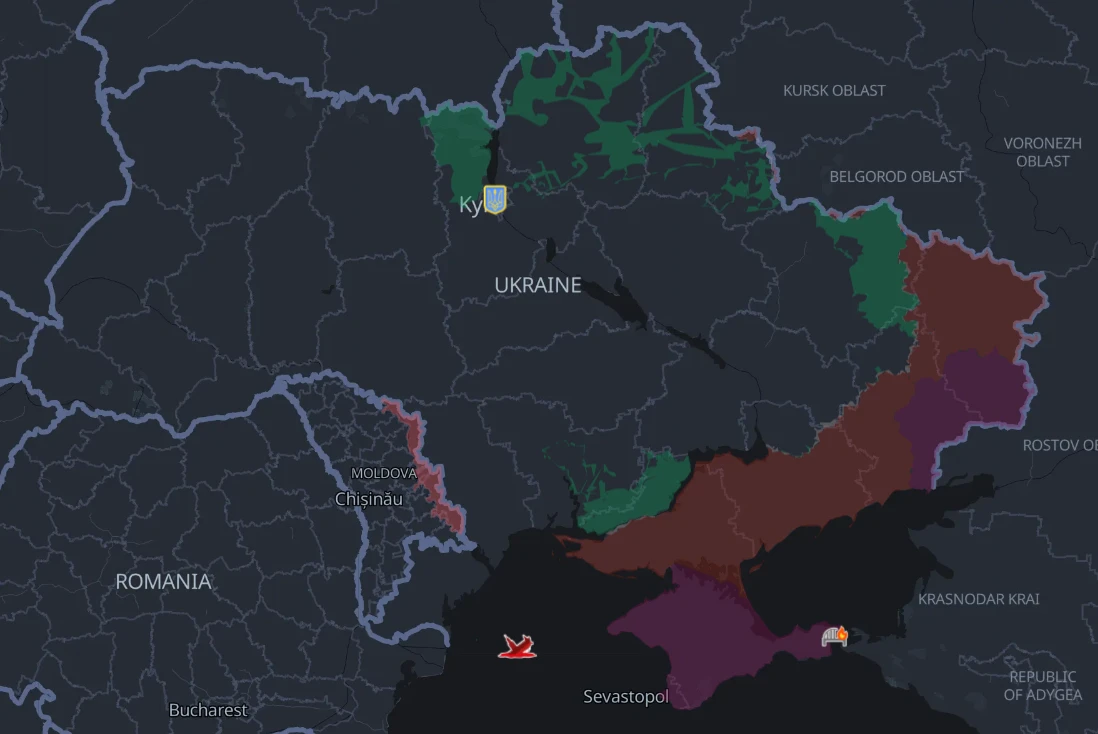
A comprehensive macro-analytical report documenting the military, domestic, and geopolitical developments on the 1553rd day of the full-scale invasion of Ukraine. This edition details the structural failures of Russia’s experimental intermediate-range ballistic missile program, the expanding automated air blockade over occupied territories, shifting diplomatic resistance in Kyiv, and acute social fractures undermining the Russian domestic interior.
The Volatile Geopolitics of the Persian Gulf and the Strategic Fragility of Energy Agendas
The intersection of global energy flows and regional conflict took a volatile turn as kinetic friction broke out in the Middle East alongside ongoing back-channel negotiations. The precarious balance of power in the Persian Gulf continues to directly influence the financial liquidity of the Russian war machine, rendering long-term economic planning highly unstable.
The complex diplomatic maneuvers between Washington and Tehran are increasingly tested by unpredictable maritime security events. While international trade networks try to factor in a potential stabilization of oil prices, raw military engagements on the ground highlight the severe limits of short-term framework agreements.
The “Self-Defense” Engagement in the Hormuz Strait
According to official communications from the United States Central Command (CENTCOM), American naval assets executed a series of highly precise defensive strikes against military targets situated along the southern coastline of Iran. The tactical deployment targeted mobile missile launching installations and specialized fast-attack watercraft operated by the Islamic Revolutionary Guard Corps (IRGC).
The military engagement followed an aggressive interception attempt by Iranian forces against an unidentified commercial merchant vessel traversing the international shipping lanes of the Strait of Hormuz. While regional news groups reported intense detonations near the strategic port city of Bandar Abbas and confirmed casualties among IRGC personnel, Western command structures emphasized that the operation functioned strictly as a localized act of self-defense, designed to preserve regional security without abandoning the broader framework of the active maritime ceasefire.
Stalled Progress in the US-Iran Nuclear Negotiations
The sudden kinetic escalation occurred simultaneously with a noticeable slowing of the highly publicized diplomatic convergence between the United States and the Iranian political leadership. Despite public assertions from US Secretary of State Antony Blinken predicting an imminent framework breakthrough, the Iranian Ministry of Foreign Affairs issued statements clarifying that a finalized maritime and nuclear accord remains unreachable in the immediate term.
While both delegations have successfully resolved baseline disputes regarding a temporary 60-day regional truce and the lifting of naval blockades on Iranian ports, deep structural disagreements regarding the permanent de-escalation of Iran’s high-enrichment uranium program have stalled progress. The resulting uncertainty has kept international energy markets on edge, preventing a total collapse of crude oil prices and granting the Kremlin a temporary reprieve from immediate, devastating budget deficits.
Tactical Anatomy of the Dual Oreshnik Launch and the Demystification of Strategic Deterrence
The operational implementation of Russia’s premium intermediate-range ballistic missile (IRBM) program suffered a major technical and public relations setback during recent offensive operations. Independent cross-border data collection has revealed that the high-profile deployment of the experimental system involved multiple launch vehicles, exposing deep reliability vulnerabilities within the state’s military-industrial complex.
The military deployment of state-of-the-art hypersonic assets was intended to project absolute strategic dominance over Ukrainian defenses. Instead, independent tracking networks have documented a dual-launch failure that fundamentally undermines the Kremlin’s core narrative of technological invulnerability.
The Non-Nominal Trajectory and Crash Over Occupied Donetsk
The primary revelation defining recent airspace operations is that the Russian Aerospace Forces simultaneously launched two experimental Oreshnik IRBM assets targeted at the Ukrainian interior. While state media heavily documented the first missile’s kinetic impact on non-military targets, the secondary missile suffered a catastrophic mid-flight technical malfunction.
З’являються деталі щодо застосування другої балістичної ракети середньої дальності «Кєдр/Орєшнік» під час масованої ракетно-дронової атаки по Україні в ніч на 24.05.26.
— monitor (@war_monitor_ua) May 25, 2026
Відомо, що запуск цієї ракети було здійснено раніше за ту, яка згодом поцілила по Білій Церкві. 🧵 pic.twitter.com/F4wkKBUJAH
It is known that the launch of this missile was carried out earlier than the one that subsequently struck Bila Tserkva.”
Integrated tracking data confirmed that this secondary missile failed to achieve its intended long-range trajectory, shedding its mass-gauge dummy warhead components prematurely over the residential areas of occupied Donetsk. Open-source intelligence collectives, including the Ukrainian OSINT group CyberBorosno, successfully geolocated security camera footage showing the distinct, multiple kinetic impacts of the breaking missile blocks within the city limits. This non-nominal deployment highlights severe system defects and demonstrates that executing similar operations with active nuclear payloads would present an extreme existential risk to the Russian Federation’s own occupied territories.
The Material Reality of the Kinetic Impact in Bila Tserkva
Concurrently, specialized defense research institutions have completed their initial physical damage assessments at the impact zone of the primary Oreshnik missile that successfully traversed Ukrainian airspace. The kinetic payload struck an ordinary civilian garage cooperative located in the municipality of Bila Tserkva, far from any viable military installations.
Technical briefs published by Defense Express revealed that the falling kinetic blocks carved out localized craters measuring up to three meters in diameter and two meters in depth, generating an impact energy estimated between 220 and 400 megajoules. This structural force is roughly equivalent to the detonation of 50 to 95 kilograms of conventional trinitrotoluene (TNT), meaning the entire multi-million-dollar intermediate-range platform produced a destructive yield comparable to a cluster of basic Shahed loitering munitions. Given that the Russian defense sector can only produce roughly five Oreshnik missiles per year, using such a platform for conventional urban terror represents a highly inefficient allocation of strategic resources.
Diplomatic Ultimatums, European Defiance, and the Operational Mechanics of Integrated Intelligence
The diplomatic friction between the Russian Federation and the European community escalated sharply following official administrative threats directed at foreign emissaries stationed in Kyiv. The resulting standoff exposed an expanding gap between the Kremlin’s rhetorical posturing and its actual capacity to disrupt the political architecture of the Ukrainian capital.
The employment of psychological ultimatums against Western diplomatic missions represents a calculated attempt by Moscow to induce institutional panic. However, this administrative pressure has been met with coordinated resistance from European ambassadors and a public disclosure of advanced early-warning capabilities.
The Ministry of Foreign Affairs Ultimatum and the European Rejection
The Russian Ministry of Foreign Affairs, through official statements delivered by spokesperson Maria Zakharova, issued a sweeping public alert demanding that all international organizations and foreign diplomatic missions immediately evacuate the city of Kyiv. The administrative justification asserted that the Russian military was preparing a series of systematic, high-intensity retaliatory strikes targeting Ukrainian military-industrial infrastructure and central decision-making hubs within the capital.

The European diplomatic corps swiftly issued a unified rejection of the Russian ultimatum. EU Ambassador Katarina Mathernová publicly condemned the statement as a masterclass in institutional hypocrisy, noting that a regime that has spent over four years deliberately targeting schools, power stations, and museums could not credibly lecture the international community on humanitarian law. The embassies of France, Poland, and Italy formally confirmed that their staffs would remain in Kyiv, continuing standard operations and framing the Kremlin’s threats as an act of diplomatic desperation rather than a projection of genuine military dominance.
The Seven-Day Logistics Window in Mass Bombardment Tracking
The psychological efficacy of the Kremlin’s bombing threats is further diminished by the highly advanced early-warning infrastructure operated by Ukrainian and Western intelligence services. Investigative disclosures published by Le Monde revealed that the military command in Kyiv systematically detects the preparation of large-scale aerial offensives up to seven days prior to launch.
Because the organization of a combined missile assault requires the complex coordination of tens of thousands of personnel — ranging from transport units moving heavy payloads to technicians fueling strategic bombers and loading sub-surface naval vessels — the entire logistical sequence leaves an unmistakable signature on modern satellite and electronic reconnaissance networks. Air Force spokesperson Yuriy Ihnat confirmed that during recent incursions, the defense command possessed a comprehensive breakdown of the exact volume and models of incoming projectiles hours before launch, allowing civilian defense units to systematically secure urban populations.
The Critical Interceptor Deficit Confronting Ukrainian Air Defense
Despite these highly advanced detection capabilities, the extreme intensity of recent Russian bombardment cycles has introduced severe operational strain on Ukraine’s defensive logistics. Air force communiqués have issued urgent public appeals detailing an acute deficit of surface-to-air guided missiles required to sustain long-term urban protection.
The supply shortages specifically impact the advanced PAC-2 and PAC-3 interceptor lots for the MIM-104 Patriot systems, alongside AIM-120 AMRAAM munitions utilized by NASAMS platforms. Military leads emphasize that while Western manufacturing partners continue to transfer replenishment assets, the current rate of consumption outpaces current arrival schedules. This forces the Ukrainian command to make difficult tactical calculations regarding the prioritization of critical frontline assets over civilian municipal centers, a vulnerability that the Russian Aerospace Forces are actively attempting to exploit through continuous saturation raids.
The Attrition of the Southern Land Corridor and the Rise of Autonomous Interdiction Networks
The terrestrial dynamics of the war have entered a phase of severe asymmetric attrition, defined by the rapid expansion of automated long-range strike weapons. While traditional ground forces face relative stagnation along the established line of contact, Ukrainian autonomous units have quietly initiated a highly effective logistical siege of occupied southern territories.
The operational reality on the ground has forced a fundamental shift in tactical objectives. What previously required massive, high-risk armored breakthroughs is now being systematically pursued through the continuous application of long-range loitering munitions.
The Historic Contraction of Russian Territorial Capture
According to objective statistical audits compiled by the Ukrainian open-source analytical project DeepState and verified by the Conflict Intelligence Team (CIT), the month of May has registered the lowest rate of Russian territorial acquisition since early 2024. Throughout the entire monthly operational cycle, the multi-axis offensives launched by the Russian Armed Forces succeeded in capturing a grand total of only 35 square kilometers of Ukrainian territory.
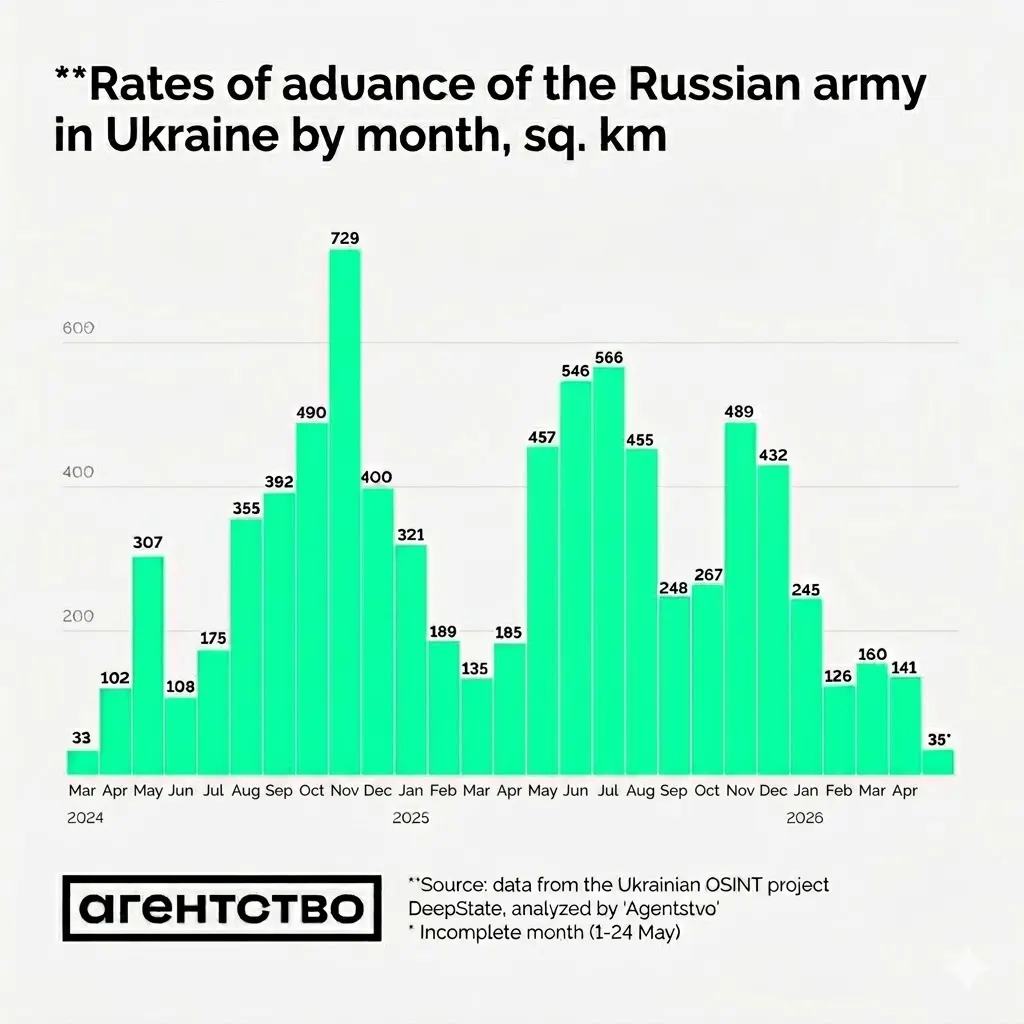
This extreme drop in offensive velocity demonstrates a profound exhaustion of the Russian military’s immediate offensive potential, especially when contrasted against the late-2024 cycles that witnessed territorial captures exceeding 700 square kilometers per month. Military historians note that if this current level of stagnation persists into the next fiscal quarter, it will confirm a fundamental degradation of the Kremlin’s armored and infantry strike formations.
The Automated Drone Siege of the R-280 and M-14 Highway Corridors
While the physical frontline remains largely static, Ukrainian defense forces have achieved a major tactical success by executing a systematic, automated air blockade along the southern land bridge to Crimea. Specialized drone units, including elements from the National Guard’s Azov brigade, have deployed dense networks of long-range kamikaze drones utilizing integrated Starlink guidance systems to patrol the critical R-280 “Novorossiya” and M-14 highway corridors.
OSINT mapping tracking recent operations has geolocated at least 45 separate successful drone strikes targeted directly against military cargo convoys, transport trucks, and fuel tankers operating along the roads from Rostov to Crimea and from Donetsk to Mariupol. This continuous automated interdiction has effectively driven private civilian transport syndicates off the route, forcing the Russian military command to choose between risking vital logistics assets or triggering an absolute supply and fuel crisis on the isolated Crimean peninsula.
Precision Neutralization of Strategic Rear Infrastructure
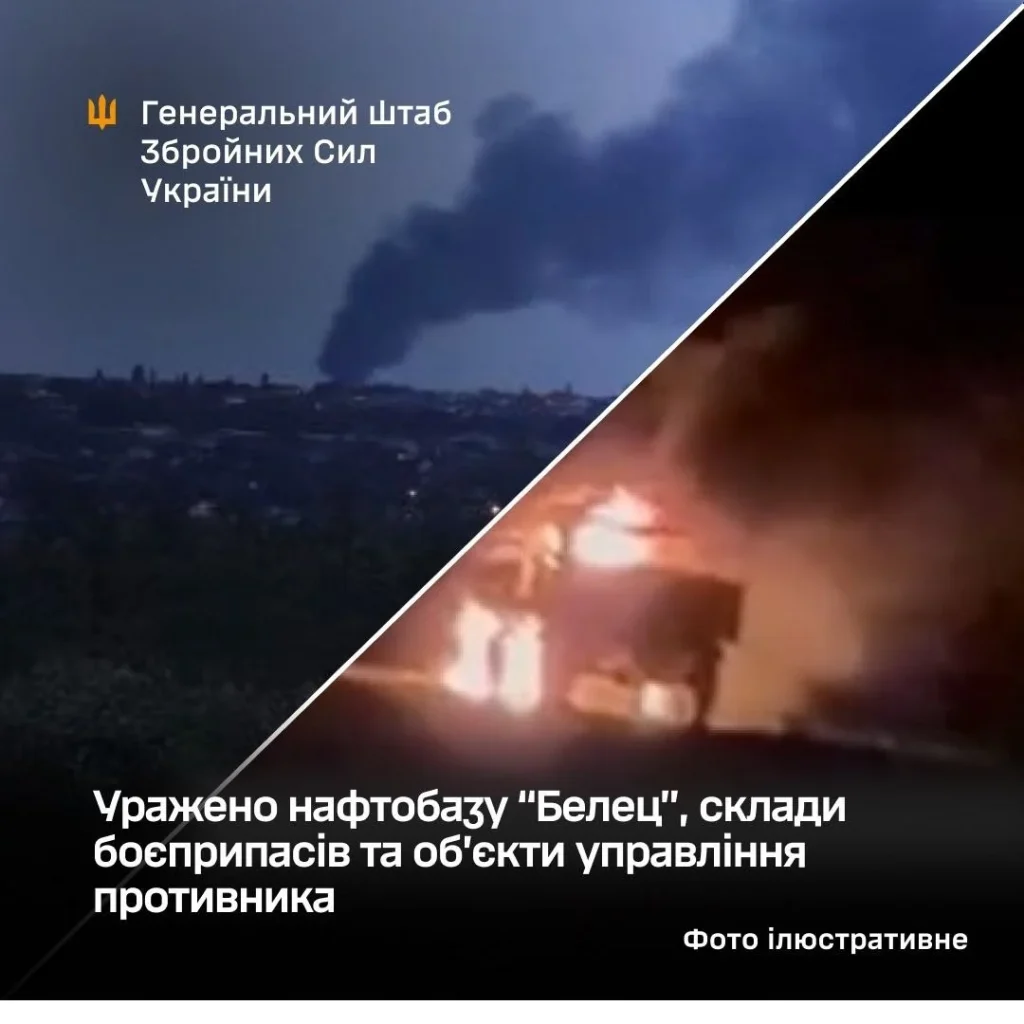
Simultaneously, Ukraine’s long-range “middle-strike” assets — operating at ranges between 30 and 200 kilometers — have successfully compromised several vital rear-area installations supporting the Russian occupation army. In the Bryansk Oblast, a coordinated drone strike successfully struck and heavily damaged the Belets-Unecha oil storage depot, a primary refueling facility for frontline armored units.
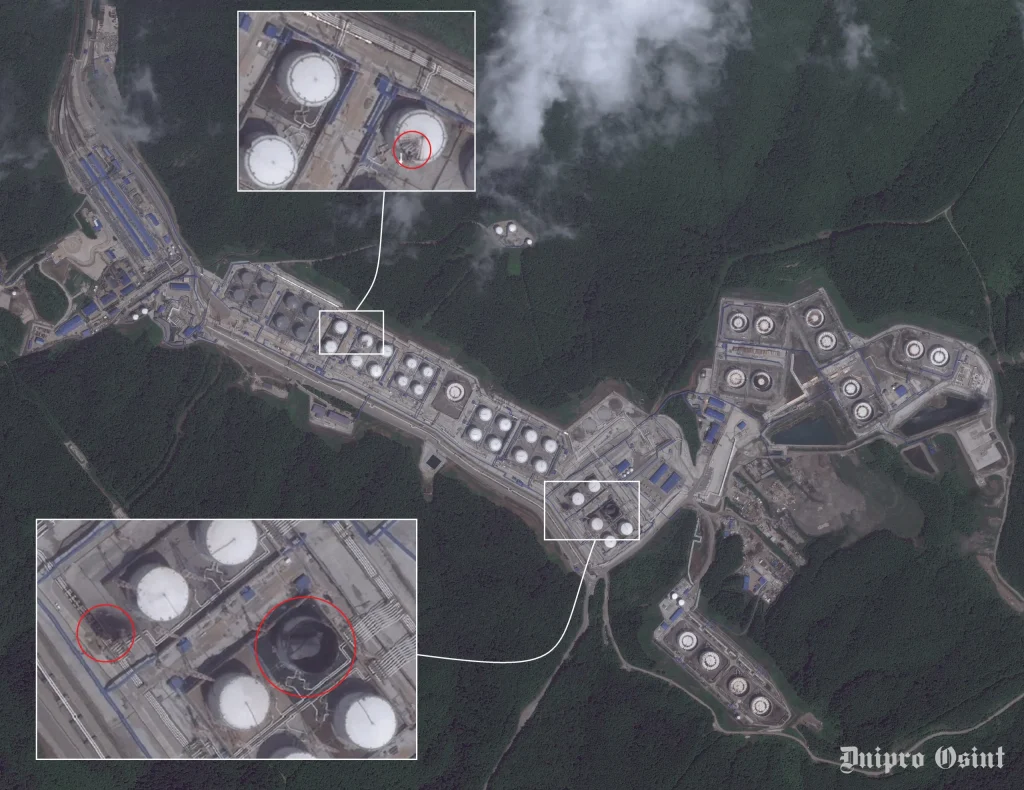
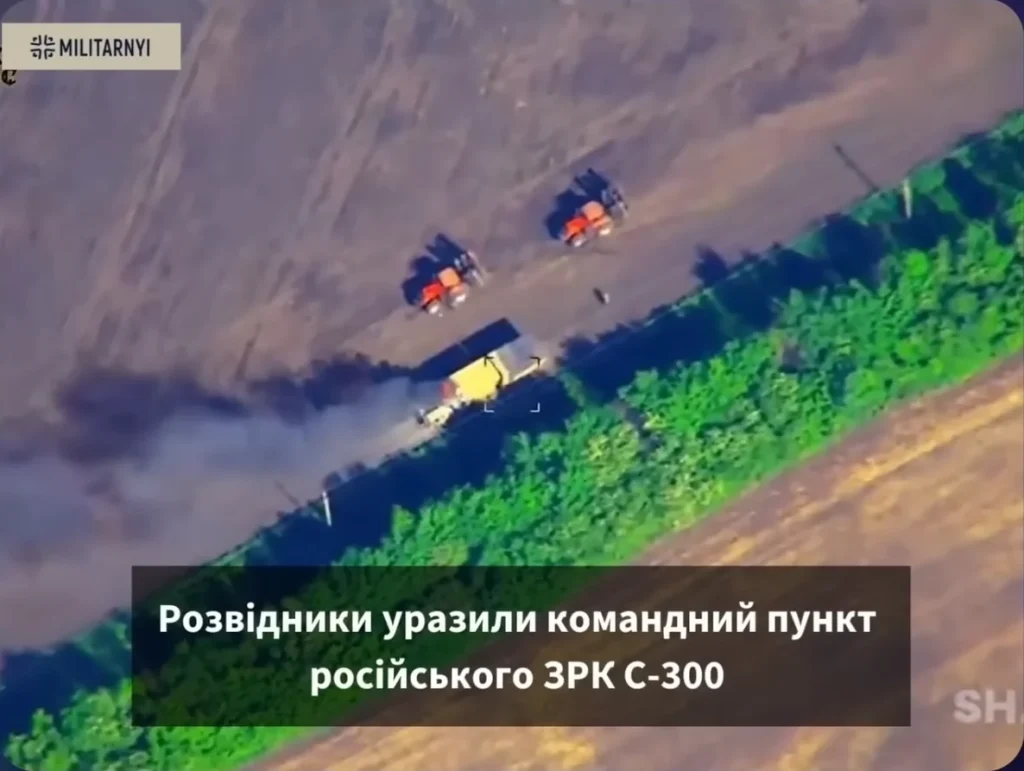
Further south, satellite data confirmed the complete destruction of a major petroleum reservoir at the Grushovaya transshipment base in Novorossiysk, alongside severe damage to adjacent pipeline junctions. Additionally, specialized artillery reconnaissance teams successfully neutralized a highly sensitive 5N63S engagement radar and command hub for a Russian S-300 surface-to-air missile system, stripping the occupation forces of vital regional air defense coverage and accelerating the logistical isolation of the southern front.
Airspace Closures, Baltic GPS Spoofing, and the Failure of Internal Technology Platforms
The operational spillover of the conflict has increasingly degraded the civilian infrastructure and regulatory stability of the Russian domestic interior. The state’s efforts to insulate its territory from long-range drone interdictions have introduced systemic disruptions across commercial aviation and technology sectors.
The continuous expansion of the air war has forced Russian regulatory organs to implement sweeping, highly restrictive domestic policies. These emergency measures demonstrate that the administrative cost of defending the state’s inner infrastructure is increasingly disrupting baseline public operations.
The Mass Blanket Prohibition on Private Civil Aviation
In a desperate administrative move to safeguard internal infrastructure from incoming loitering munitions, Russian aviation authorities, via Rosaviatsia, implemented an unprecedented blanket prohibition on all private and civil aviation flights below an altitude of 5,100 meters. The sweeping restriction establishes a massive exclusion zone encompassing the entire Moscow flight region, extending west to the Belarusian border, north to Saint Petersburg, and east to Samara and Ekaterinburg.
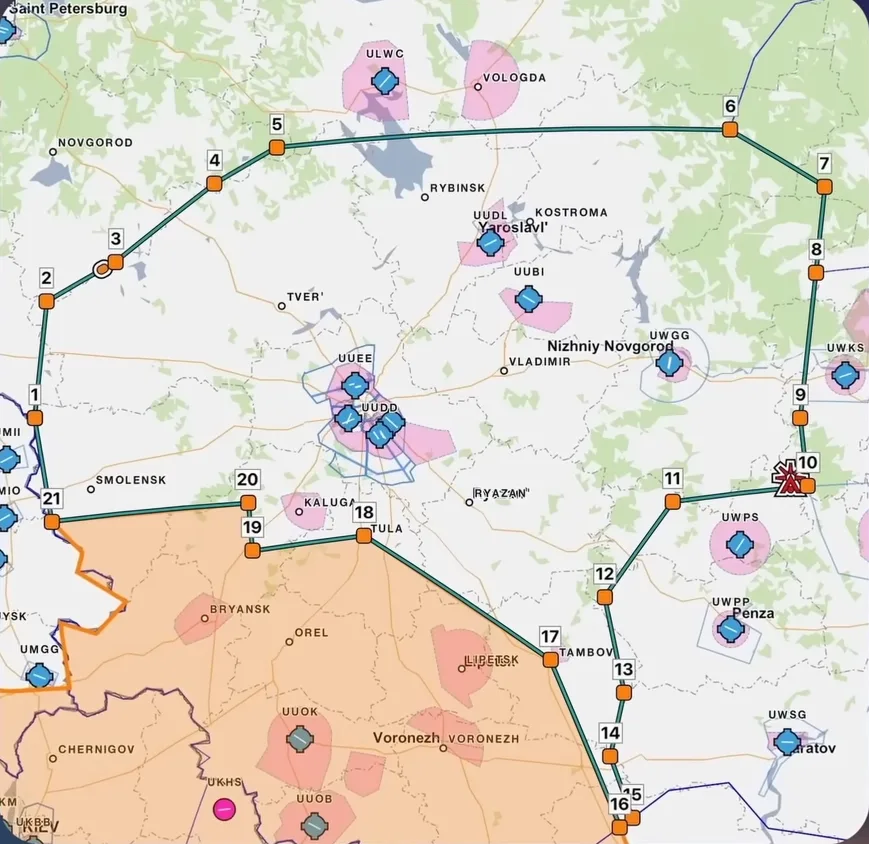
According to professional pilot associations, the total suspension of private business jets and non-scheduled helicopter flights was enacted because state air defense networks are fundamentally incapable of distinguishing small civilian aircraft from low-flying Ukrainian strike drones. To prevent catastrophic friendly-fire incidents during mass drone raids, the state chose to shut down private regional aviation for the remainder of the conflict, dealing a severe economic blow to corporate logistics.
Electronic Warfare Escalation and GPS Spoofing in Kaliningrad
Simultaneously, the geopolitical flashpoint of the Kaliningrad enclave has generated acute international friction due to the aggressive deployment of powerful state electronic warfare (EW) installations. Investigative reports published by The Telegraph revealed that Russian military units stationed in the enclave are executing continuous, high-intensity GPS spoofing operations designed to disrupt the guidance systems of long-range Ukrainian drones traversing Northern Europe.
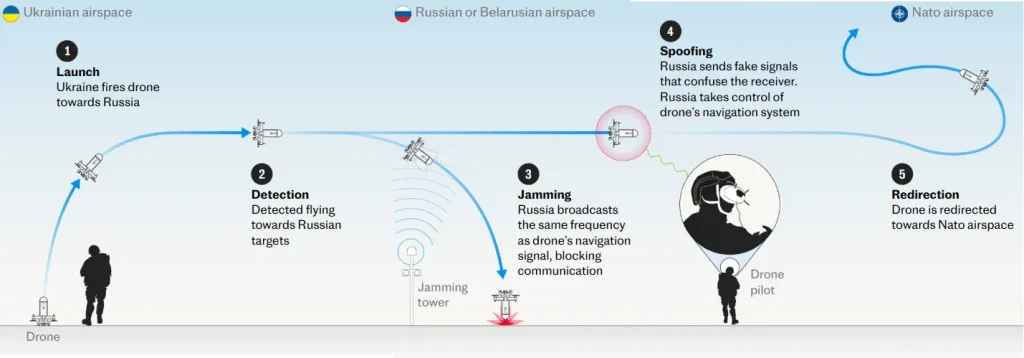
The military application of fake navigation data has inadvertently caused severe disruptions across international civil aviation, frequently forcing commercial airliners across Finland and the Baltic States to drop satellite navigation entirely and revert to analog instrumentation. International security analysts warn that using the Kaliningrad enclave to actively interfere with European airspace functions as a direct act of cross-border aggression, prompting intensive debates within NATO regarding the necessity of establishing direct fire control over the enclave’s military infrastructure.
Human Attrition Dynamics, Systemic Corruption, and Domestic Fragility Within the Russian State
The human and institutional costs of sustaining the multi-year invasion are creating severe cracks across the social and administrative framework of the Russian Federation. The reliance on coercive recruitment, systemic corruption within the military hierarchy, and the return of traumatized penal convicts have combined to destabilize regional security.
The domestic stability that previously shielded the average Russian citizen from the realities of the war is fracturing. As returning combatants re-enter civilian life and military units face extreme casualty rates, the social contract of the regime is under unprecedented strain.
Extreme Attrition and Extortion within Frontline Staging Units
Granular accounts emerging from frontline assault formations expose a catastrophic rate of human attrition that is systematically covered up by the Ministry of Defense. A detailed public testimony from a Russian reconnaissance scout with the callsign “Izya,” assigned to a specialized “Storm” detachment, revealed that out of an original 50-man combat complement within his unit, only five remain active in the field, with another five surviving as permanently disabled amputees.


This internal exhaustion is exacerbated by widespread systemic corruption within the officer corps. Relatives of personnel assigned to the 254th Motorized Rifle Regiment launched public legal campaigns exposing how senior officers, including a prominent battalion commander with the callsign “Hooligan,” actively extort large financial bribes from subordinates in exchange for basic field equipment, while falsifying casualty records and threatening to execute wounded soldiers who refuse to return to frontal infantry charges.
Forced Employment Quotas and Penal Violent Crime in Urban Centers
The acute domestic crisis has forced regional governments to enact desperate economic mandates to manage the social influx of returning combatants. In the Republic of Tatarstan, the regional administration has drafted punitive legislation designed to heavily fine private business owners up to 100,000 rubles if they refuse to satisfy mandatory employment quotas for returning veterans.
This administrative coercion occurs against a backdrop of rising violent crime inside major cities, driven by pardoned convicts returning from private military formations. In Saint Petersburg, a recently discharged Wagner convict named Sergey Mikhailov — who possessed prior criminal convictions for armed assault and fraud — executed a brutal domestic attack on a young woman, shooting her with a signal pistol and pouring concentrated nitric acid over her inside her apartment. Upon his arrest, Mikhailov loudly proclaimed to law enforcement units that he enjoyed absolute legal immunity because he could simply re-enlist for frontline duty, a manifestation of the severe domestic lawlessness eroding the Russian state from within.
This article is based on source material from Michael Nacke’s video covering day 1553 of the war →