
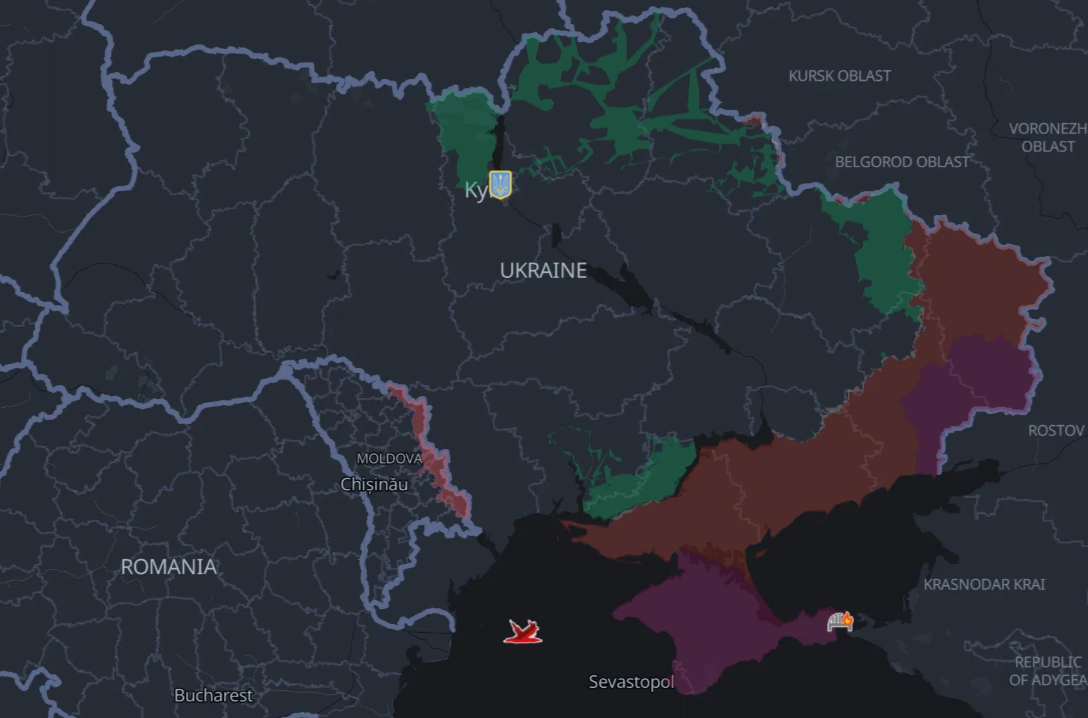
A comprehensive macro-analytical report documenting the military, economic, and geopolitical transformations on the 1552nd day of the full-scale invasion of Ukraine. This edition details the automated blockade of Russia’s southern logistical supply lines, the collapse of state-backed import substitution schemes, expanding rifts within the Kremlin’s political circles, and profound diplomatic shifts across the European continent.
US-Iran Maritime Negotiations and the Looming Threat of Oil Market Deflation
The structural mechanics of the global energy market experienced profound disruption as diplomatic channels between Washington and Tehran yielded tangible baseline agreements. For the financial architecture supporting the Russian Federation’s military expenditures, these unfolding maritime negotiations represent an acute systemic threat that could rapidly accelerate domestic fiscal depletion.
The geopolitical landscape of the Middle East is rapidly shifting, forcing international energy metrics to adjust to new diplomatic realities. The potential resolution of the prolonged Persian Gulf crisis threatens to destabilize the artificially inflated pricing structures that have kept the Russian federal budget afloat despite extensive Western sanctions.
The Framework of the Hormuz Strait Agreement
According to verified intelligence briefs published by both the New York Times and the Washington Post, the United States administration has successfully brokered a comprehensive framework memorandum of understanding with the Iranian political leadership. The core parameters of this evolving diplomatic accord stipulate an immediate 60-day regional ceasefire across all active operational theaters, most notably including Southern Lebanon, to allow diplomatic delegations to formalize a permanent agreement.
In exchange for Iran completely restoring unrestricted commercial navigation through the strategically critical Strait of Hormuz, the United States has committed to systematically dismantling its ongoing naval blockade of primary Iranian shipping hubs. While Tehran’s military advisors publicly assert their sovereign right to police adjacent waters, senior Iranian officials have conceded that the memorandum serves as a necessary mechanism to unlock billions of dollars in frozen foreign assets, fundamentally altering the maritime security paradigm of the region.
Immediate Deflationary Impact on Russia’s Federal Budget
The mere announcement of high-level convergence between Washington and Tehran triggered an immediate, sharp contraction across international petroleum exchanges, driving global crude prices below the $100 per barrel threshold. This rapid price depreciation hits the Russian financial apparatus at a moment of extreme vulnerability, as the Kremlin’s current federal budget is structurally incapable of balancing its expanding military spending without highly inflated energy revenues.
Independent economic analysts note that while a prolonged Persian Gulf blockade previously served as an artificial financial lifeline for Moscow, the sudden prospect of un-sanctioned Iranian crude flooding the global market introduces severe deflationary risks. If regional energy risks continue to diminish, the timeline for a total fiscal crisis within the Russian state will contract significantly, stripping the Kremlin of the economic liquidity required to sustain its long-term war of attrition.
Cultural Dissolution and Growing Fractures Within the Russian Political Elite
The internal psychological state of the Russian pro-war information space and political establishment has degraded into a state of visible mutual recrimination. The failure of recent strategic bombing campaigns to achieve meaningful operational outcomes has catalyzed deep disillusionment among both nationalist military commentators and senior oligarchic figures.
The facade of domestic political unity inside the Russian Federation is fracturing under the weight of sustained military stagnation and economic overcooling. As the gap between state-directed propaganda and the physical realities of the frontline widens, prominent figures within the regime are beginning to voice unprecedented institutional criticism.
The Failure of the Oreshnik and the Z-Patriot Backlash
The lingering smoke over the Ukrainian capital following recent combined missile raids has triggered a wave of intense frustration across the nationalist Russian “Z-blogger” telegram networks. Rather than celebrating the deployment of the state’s newest intermediate-range ballistic missile, the Oreshnik, prominent commentators have openly dismissed the weapon as a highly inefficient, exorbitant technological failure.
Well-known military analysts, including Yuri Baranchik, published extensive critiques arguing that the regular, non-nuclear deployment of strategic IRBMs completely dismantles the psychological aura of deterrence surrounding such systems. By repeatedly utilizing an incredibly expensive hypersonic platform to obliterate minor civilian installations — such as an ordinary municipal garage cooperative in Bila Tserkva — the Russian high command has effectively demonstrated that the weapon lacks operational efficacy in a conventional theater, while proving that Western defense networks have completely adapted to the psychological threat of rear-area vulnerability.
The Guardian’s Disclosure of Inner-Kremlin Disillusionment
This grassroots nationalist frustration is closely mirrored by severe administrative anxiety within the upper echelons of the Russian political and business elite. An extensive investigative report published by The Guardian, leveraging direct testimony from inner-circle sources and Western intelligence officials, confirmed the onset of profound institutional disillusionment with Vladimir Putin’s leadership.
Oligarchic clusters and state corporate executives have reportedly lost all confidence in the state’s long-term economic trajectory, privately describing the current domestic environment as a slowly unfolding national catastrophe. Despite this internal alarm, intelligence briefs indicate that Putin remains completely isolated within an artificial information vacuum, fed entirely on falsified, highly optimistic military reports manufactured by senior generals. This structural disconnect ensures that the Russian executive continues to pursue an unrealistic strategy centered on the complete territorial capture of the Donbas by the end of the fiscal year, oblivious to the fact that current attrition rates make such an objective statistically impossible.
Domestically Violating the Social Contract via Digital Blackouts
The internal friction within the state has begun to manifest as a direct violation of the unwritten social contract that historically preserved public compliance across major Russian urban centers. In a desperate bid to counter localized Ukrainian drone interdictions, the Second Directorate of the Federal Security Service (FSB) has executed sweeping, unannounced digital blockouts, completely disabling mobile internet infrastructure and restricting public communication access exclusively to a state-controlled alternative network named “Max.”
These heavy-handed security measures have triggered billions of rubles in documented operational losses for private commercial enterprises, sparking public pushback from small business owners and agricultural collectives. Coupled with escalating federal tax brackets, sharp inflationary price hikes on basic foodstuffs, and sudden infrastructure failures, the state’s domestic happiness index has plunged to a fifteen-year absolute minimum, indicating that the Russian civilian population can no longer remain entirely indifferent to the material costs of the ongoing war.
Shifting International Alliances and Regional Security Crises Across Europe
The geopolitical alignment of the European continent is undergoing rapid stabilization as secondary states distance themselves from Moscow’s influence. Simultaneously, internal debates within the North Atlantic Treaty Organization (NATO) highlight the complex financial and political dynamics governing international military assistance.
The shifting vectors of European diplomacy demonstrate a growing isolation of the Russian state, even within regions historically viewed as receptive to the Kremlin’s influence. As secondary actors calculate the long-term costs of alignment with a collapsing economy, old alliances are being systematically dismantled.
The Budgetary Norm Conflict Within NATO Assistance
During preparatory ministerial sessions ahead of the annual North Atlantic Council summit in Ankara, a significant diplomatic dispute emerged regarding the institutionalization of long-term military aid to Ukraine. A strategic initiative championed by NATO Secretary General Mark Rutte, which sought to establish a mandatory baseline requiring member states to allocate at least 0.5% of their annual GDP to direct military assistance for Kyiv, was formally blocked by a powerful coalition of European capitals.
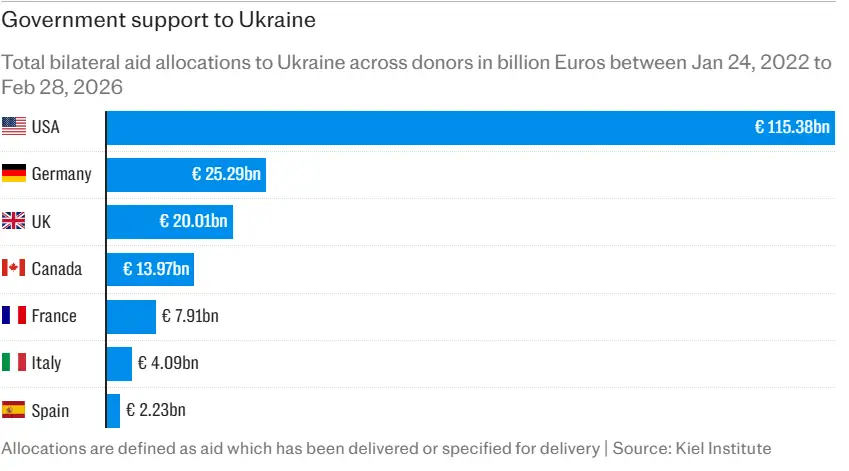
Diplomatic dispatches confirm that Great Britain, France, Italy, Spain, and Canada exercised their institutional veto power to halt the mandatory framework, arguing instead for the preservation of voluntary, flexible national contributions. While seven nations—specifically Poland, the Netherlands, and the Baltic and Scandinavian states — warmly endorsed the binding norm, the opposition from Europe’s largest economies underscores persistent domestic budgetary anxieties within the alliance, even as individual leaders pledge uninterrupted material support.
The Balkan Realignment: Belgrade’s Public Distance from Moscow
Concurrently, the Russian Federation suffered a profound diplomatic setback in the Balkans, a region historically viewed as a core zone of pan-Slavic geopolitical alignment. Standing before international delegates at the Globsec security conference in Prague, the Speaker of the Serbian Parliament, Ana Brnabić, delivered an explicit, formal declaration stating that Serbia does not consider the Russian Federation a brotherly nation and views the ongoing invasion of Ukraine as an unprovoked, absolute act of military aggression.
This dramatic rhetorical shift coincides with massive municipal protests in Belgrade, where tens of thousands of citizens have mobilized under the banner “Students Win” to demand deep institutional anti-corruption reforms from the government of Aleksandar Vučić. Faced with escalating domestic instability and the abrupt suspension of millions of Euros in European Union development grants due to perceived ties with Moscow, the Serbian political leadership is rapidly pivoting toward the West, with Vučić publicly hinting at his own impending resignation to facilitate early democratic elections.
The Franco-Belarusian Dialogue and the Geopolitical Trap for Lukashenko
The expanding international isolation of the Kremlin was further emphasized by an unexpected high-level diplomatic intervention originating from Paris. In an unexpected telephone communication — the first formal contact between the two leaders since early 2022 — French President Emmanuel Macron directly contacted Belarusian leader Alexander Lukashenko to deliver a stern, explicit warning against entering active combat operations.
Strategic analysts note that Lukashenko finds himself trapped in a catastrophic geopolitical dilemma; if he yields to intense Kremlin pressure to mobilize the Belarusian armed forces, he risks triggering an immediate domestic uprising among a population that remains overwhelmingly hostile to the regime. Furthermore, European defense links have made it clear that any direct Belarusian involvement would result in the immediate kinetic destruction of the state’s primary oil refineries by Ukrainian long-range strike units, a reality that motivates Lukashenko to seek back-channel diplomatic exit ramps away from his alliance with Moscow.
Armenia’s Accelerated Integration into the European Union
The complete realignment of post-Soviet security architectures reached a historic milestone in the South Caucasus, where the Republic of Armenia has effectively finalized its departure from the Russian geopolitical orbit. Prime Minister Nikol Pashinyan announced that Armenia is on track to achieve a comprehensive visa-free travel regime with the European Union within the next twenty-four months, completing a strategic pivot catalyzed by the total failure of the Russian-led Collective Security Treaty Organization (CSTO) to fulfill its mutual defense obligations.
This institutional integration is driven by an unprecedented 500% explosion in travel metrics between Yerevan and European capitals over recent years. As Armenia actively codifies its alignment with Western legal frameworks, international legal bodies are now urging the Armenian parliament to pass binding statutory legislation explicitly prohibiting the extradition of individuals facing political persecution to the Russian Federation, transforming the state into a secure haven for regional dissidents.
Frontline Realities: The Interdiction of the Crimean Logistical Corridor
On the sovereign territory of Ukraine, the war continues to evolve as a highly automated battle of technological attrition. The operational focus of the Ukrainian general staff has increasingly shifted toward the calculated use of long-range loitering munitions to systematically isolate critical Russian military garrisons.
The tactical geography of the southern theater of operations has been transformed by the deployment of advanced autonomous systems. By targeting the narrow, highly vulnerable infrastructure links connecting western Russia to occupied territories, Ukrainian forces are achieving major strategic objectives without relying on high-risk terrestrial assaults.
The Asymmetric Siege of the R-280 Highway via Loitering Munitions
Military analysts are documenting a quiet but profound operational transformation along the southern front, as Ukrainian forces execute a systematic technological blockade of the land bridge to Crimea. The primary logistical artery sustaining the occupied peninsula, the R-280 “Novorossiya” federal highway, has been placed under a state of continuous, asymmetric siege by massed waves of Ukrainian long-range drone units.
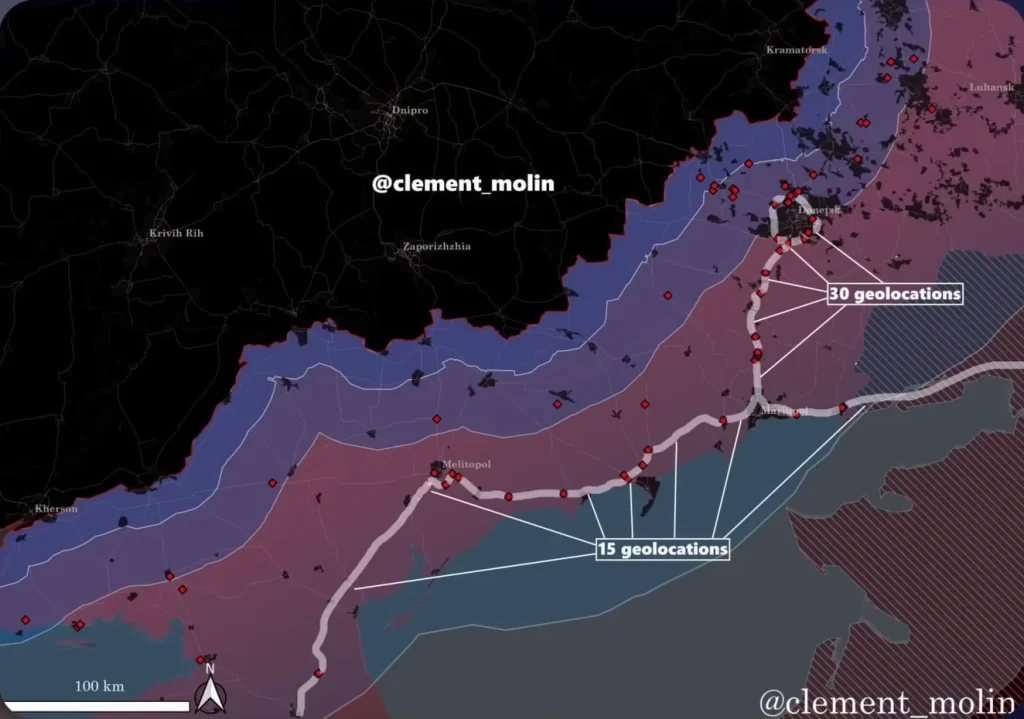
Following the severe structural damage inflicted on the Crimean Bridge in 2022, the Russian military command was forced to completely ban commercial transport trucks from using the span, redirecting thousands of supply vehicles daily along the R-280 corridor. Ukrainian strike components are now leveraging specialized kamikaze drones utilizing integrated Starlink communications links to conduct precise terminal guidance hunts against these logistical convoys, dramatically inflating the operational costs, vehicle attrition rates, and insurance liabilities borne by Russian transport syndicates.
Target Elimination: The Kursk Strike on the Akhmat Unit
The efficacy of Ukraine’s deep-reconnaissance and precision strike components was further demonstrated within the contested territory of the Kursk Oblast. A high-altitude Ukrainian reconnaissance drone successfully located and monitored a hidden training encampment and tactical staging site utilized by the specialized Russian “Akhmat” paramilitary battalion.
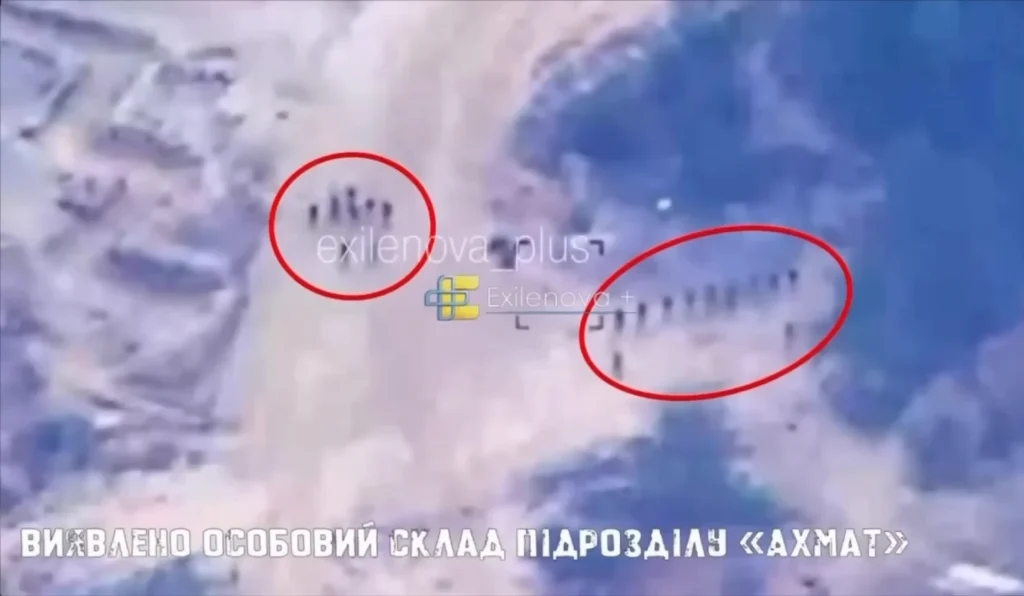
Upon receiving real-time geolocated targeting coordinates, Ukrainian missile components executed a highly accurate kinetic strike against the compound, resulting in the complete destruction of the unit’s specialized barracks and training infrastructure. Subsequent unedited drone footage confirmed the successful neutralization of dozens of paramilitary fighters, demonstrating the high vulnerability of Russian tactical reserves to automated counter-battery and long-range missile interdictions.
Systemic Combat Fraud: Conscript Abuse in the 132nd Brigade
The acute manpower shortages confronting the Russian frontline command have led to the widespread proliferation of predatory and fraudulent administrative practices within regional deployment hubs. Wives and mothers of personnel assigned to the 132nd Separate Motorized Rifle Brigade have released collective video appeals documenting severe, institutionalized human rights abuses executed by unit commanders.



The testimonies reveal that wounded soldiers suffering from complex compound fractures and retained shrapnel are routinely forced out of medical field clinics and sent into frontal assaults on crutches without undergoing mandatory medical evaluations. Furthermore, families revealed that commanding officers systematically classify deceased or missing personnel as completely unaccounted for to withhold statutory financial compensation, while misleading families regarding the actual geographical coordinates of frontline operations.
The Domestic Failure of Russian Technological Substitution
The economic strains of maintaining an isolated, autarkic wartime economy are increasingly undermining the Kremlin’s core import-substitution initiatives. The state’s efforts to replace Western software ecosystems with domestic alternatives are collapsing under the weight of severe financial mismanagement and deep corporate losses.
The structural limits of technological self-reliance within an isolated economy have become increasingly apparent across Russia’s corporate landscape. Without access to international capital markets and foreign engineering networks, even highly protected state-backed technology monopolies are facing rapid structural decay.
The Financial Collapse and Mass Layoffs at My Office
A stark indicator of this systemic industrial contraction is the sudden financial collapse of the prominent Russian software developer, New Cloud Technologies (NOC), the corporate entity responsible for manufacturing “My Office” (Moy Ofis). Originally launched in 2013 and heavily backed by the state-controlled cybersecurity firm Kaspersky Lab, “My Office” was aggressively promoted by the Ministry of Digital Development as the premier, mandatory domestic alternative to Microsoft Office for all state agencies, municipal governments, and defense entities.

Internal corporate communications leaked to economic journals confirm that the enterprise has enacted sweeping, near-total layoffs across almost all core departments, retaining only a skeleton crew of low-level technical support staff. The sudden liquidation of the country’s primary software substitution flagship — driven entirely by billions of rubles in accumulated structural losses — exposes the profound failure of the Kremlin’s domestic self-reliance initiatives, proving that administrative mandates cannot substitute for real economic viability within an increasingly distorted, state-dominated market.
This article is based on source material from Michael Nacke’s video covering day 1552 of the war →