
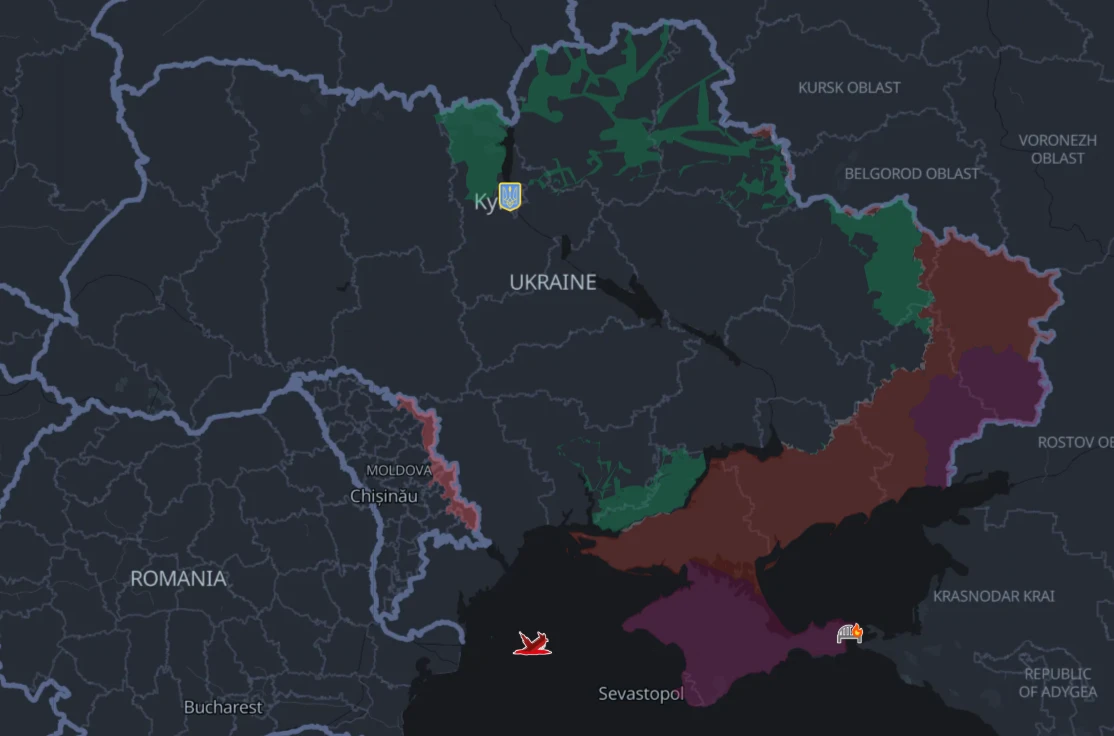
A comprehensive historical and analytical report documenting the military operations, technological developments, and geopolitical shifts on the 1555th day of the full-scale invasion of Ukraine, recorded on May 28, 2026. This edition details Ukraine’s direct diplomatic appeals to the United States, the formalization of a massive state program designed to choke off Russian rear supply lines, expanding military axes across the occupied territories, and the severe economic adjustments forced upon the Russian domestic population to sustain the Kremlin’s war machine.
Geopolitical Appeals and Media Realignment
The international diplomatic arena on Day 1555 was defined by intensified messaging from Kyiv aimed directly at the political leadership and citizens of the United States. As the conventional theater of operations faces sustained high-velocity attrition, the Ukrainian administration has sought to bypass bureaucratic inertia by presenting clear, transactional proposals that tie European security directly to American strategic interests.
Zelenskyy’s Strategic Memorandum to Washington
President Volodymyr Zelenskyy issued a formal, direct address directed at Donald Trump, the United States Congress, and the American populace, explicitly outlining Ukraine’s immediate air defense requirements. The strategic core of the memorandum was a pragmatic request to purchase advanced interceptor missiles for the MIM-104 Patriot system, which remain the only highly effective conventional defense against Russia’s relentless deployment of Iskander-M tactical ballistic missiles.
1 / Zelensky's letter to President Trump and to Congress asking for urgent supply of Patriot interceptors (see the rest ofbthe letter in the following tweet) pic.twitter.com/uThDDjOZbz
— Barak Ravid (@BarakRavid) May 27, 2026
Zelenskyy framed the appeal within a narrative of historical consistency, noting that it was Donald Trump’s landmark 2018 authorization of anti-tank missile systems that preserved Ukrainian defensive lines during the opening hours of the 2022 invasion. The document emphasized that the Armed Forces of Ukraine now function as the largest, most battle-hardened military force in Europe, uniquely positioned to defend the Western democratic alliance, provided their acute ammunition deficits are resolved.
Furthermore, the memorandum disclosed a highly significant reciprocal defense contribution: in response to urgent regional security requests, Ukraine has deployed specialized air defense personnel to the Middle East to reinforce the protective arrays shielding American military installations in Jordan, Saudi Arabia, the United Arab Emirates, Qatar, and Kuwait against Iranian-manufactured threats.
The Conservative Media Shift: The New York Post Perspective
Simultaneously, a prominent analytical feature published by the New York Post signaled a notable rhetorical shift within conservative American media circles. The publication openly acknowledged that the Ukrainian military holds critical strategic leverage that completely invalidates previous assertions that Kyiv possesses no viable cards in future diplomatic engagements.
The editorial board emphasized that previous mediation efforts foundered entirely because the Kremlin insisted on territorial concessions that far exceeded its actual tactical capabilities on the ground. The feature concluded that any future negotiated settlement will remain structurally impossible until Washington applies genuine conventional pressure to shatter Vladimir Putin’s informational bubble, which is systematically maintained by overly optimistic field reports passed up through the Russian chain of command.
The publication urged the American administration to expand intelligence sharing and maintain the flow of European-financed weaponry, emphasizing that forcing further unilateral concessions on Ukraine would only invite deeper global instability.
Operational Middle-Strikes and the Southern Logistical Lockdown
On the physical battlefield, the Ukrainian defense apparatus has shifted from localized containment to a broad, data-driven campaign of operational-depth interdiction. By leveraging advanced autonomous technologies, the Ukrainian high command has initiated an aggressive effort to decouple the Russian frontline units from their primary domestic supply hubs.
Fedorov’s Automated Logistical Lockdown Doctrine
The Minister of Defense, Mykhailo Fedorov, officially announced the deployment of a synchronized state program entitled “Logistical Lockdown,” backed by an immediate allocation of 5 billion hryvnias directly to frontline brigades. These financial resources are earmarked for the decentralized procurement of advanced mid-range strike drones designed to operate continuously within the enemy’s operational rear.
We are launching a "logistics lockdown" for the Russian army. We are scaling middle-strike operations to systematically destroy enemy logistics and supply lines, stripping them of their capacity to mount offensive actions. We’ve allocated an additional 5 billion UAH for direct… pic.twitter.com/g8h45T5woh
— Mykhailo Fedorov (@FedorovMykhailo) May 27, 2026
Fedorov emphasized that this initiative represents a transition to highly analytical automated warfare, utilizing expansive digital dashboards to establish a direct mathematical correlation between the destruction of rear supply vehicles and the subsequent drop in Russian assault velocity along the line of contact.
The state program is structured in two distinct phases: immediate direct funding to high-efficiency drone units to bypass standard procurement delays, followed by the launch of centralized, transparent state tenders over the summer to achieve unprecedented industrial scale.
The Attrition and Panic Along the Southern Transit Corridor
The immediate operational impact of this long-range interdiction campaign is visibly destabilizing the R-280 “Novorossiya” highway corridor, which serves as the absolute vital land bridge linking Rostov-on-Don to occupied Mariupol, Melitopol, and the Crimean peninsula. Internal communications extracted from specialized digital transit networks — administered by pro-Kremlin media managers — reveal a state of growing panic among transport drivers.
Users frequently report incinerated logistics trucks lining the shoulders of the highway, severe localized fuel shortages, and standard diesel prices skyrocketing to 100 rubles per liter along the southern route. Regional administrators systematically delete these warnings to maintain an illusion of security, threatening users with immediate digital bans for spreading panic.
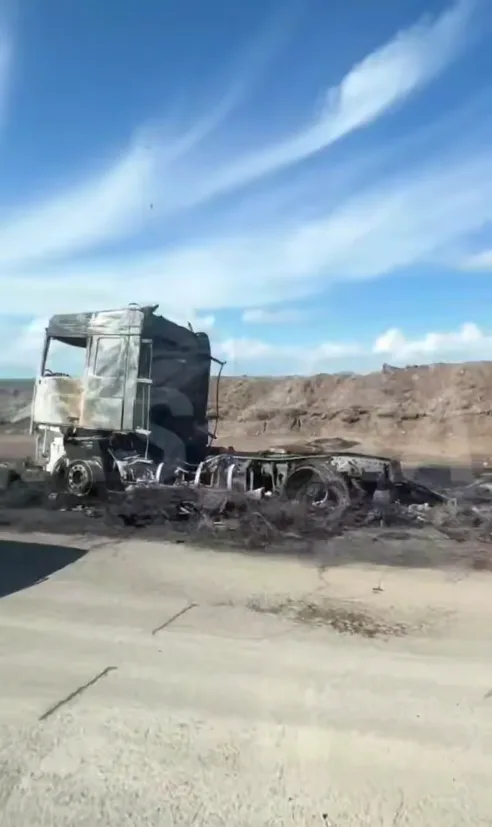
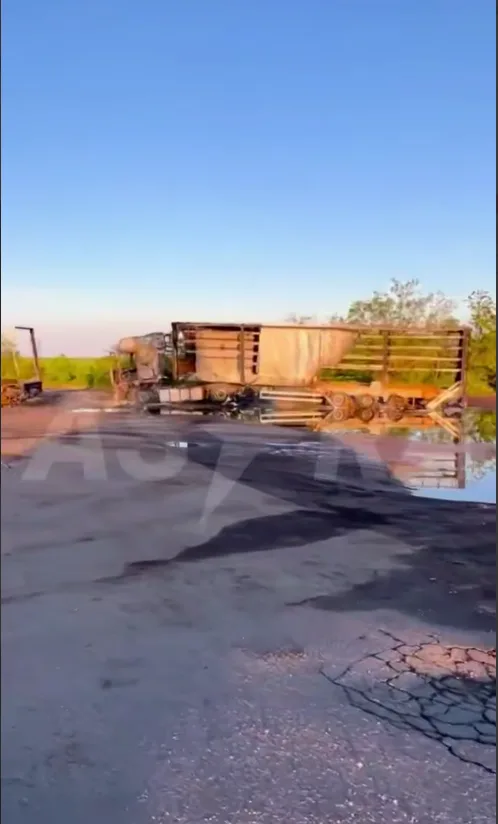
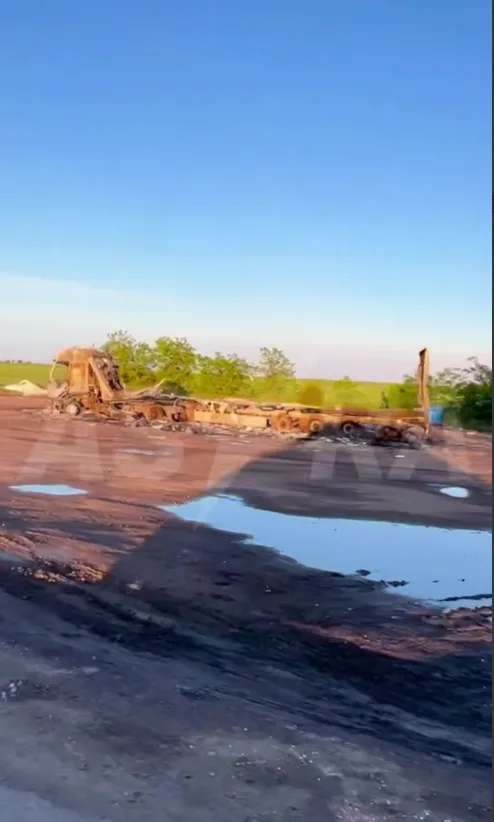
Simultaneously, prominent Russian military correspondents have begun publicly questioning why the state has failed to construct kilometers of defensive drone nets over these vital transit arterials, noting that Ukraine has successfully standardized the installation of protective highway netting across its own transit grid.
Penetrating Command Hubs and Strategic Infrastructure in Luhansk, Sevastopol, and Tuapse
According to official statements from the General Staff of the Armed Forces of Ukraine, a targeted strike utilizing Storm Shadow cruise missiles successfully neutralized a high-value enemy asset in the occupied Luhansk region. Imagery analysis provided by the CyberBorosno project verified that the precision missiles struck a hidden Russian military command post located deep within a forest matrix near the village of Rogovo, severely disrupting regional operational control channels.
Simultaneously, the occupied port city of Sevastopol faced an extensive overnight bombardment involving a combined wave of autonomous drones and Storm Shadow missiles. Local occupation officials confirmed that a cruise missile directly penetrated the Southern Management building of the Central Bank of Russia, causing a massive fire across the facility’s roof structure. Parallel intelligence from independent monitoring networks like Crimean Wind confirmed that the strike package also inflicted severe structural damage on the Black Sea Fleet’s Air Force headquarters building.
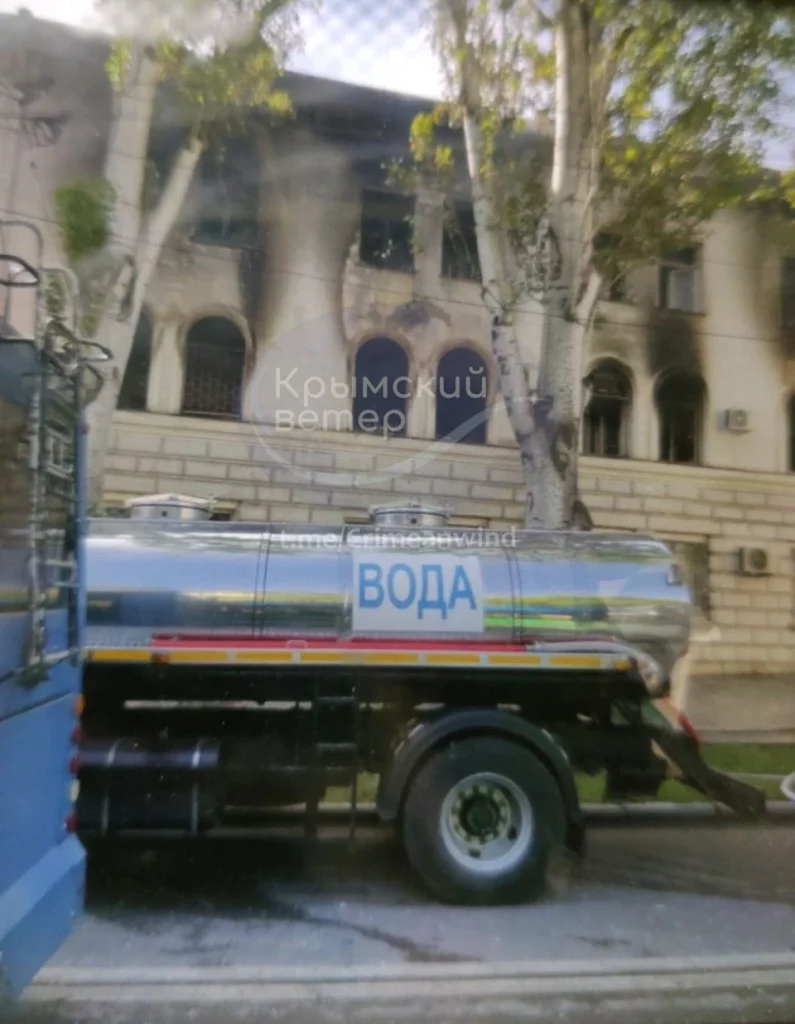
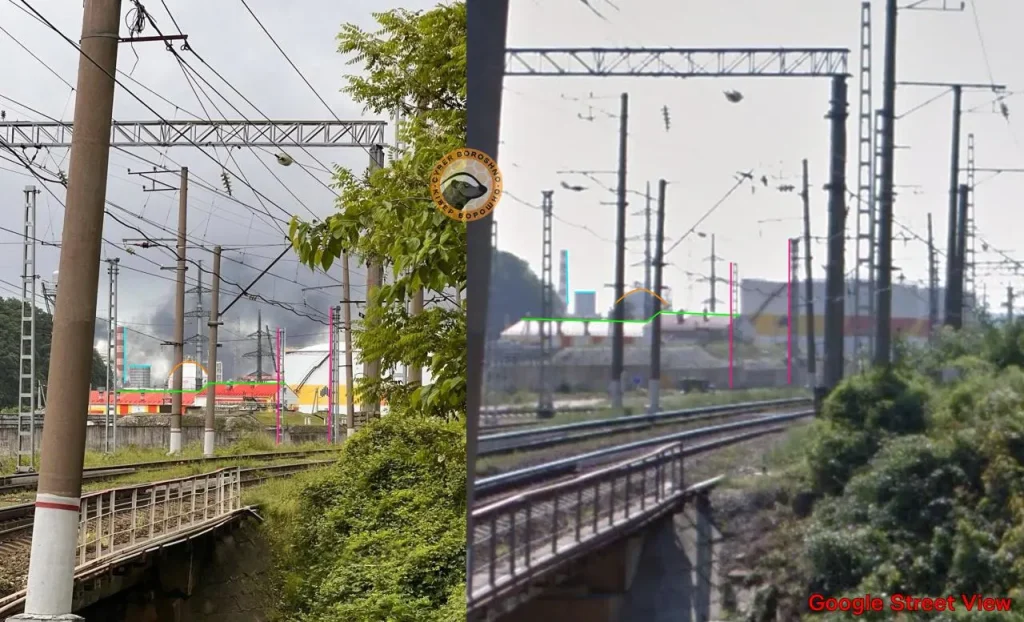
Further east along the Black Sea coast, a concentrated overnight drone deployment triggered a massive fire at the marine terminal in the port of Tuapse. The operational headquarters of the Krasnodar Krai confirmed a large-scale emergency response requiring extensive firefighting assets to contain the blaze. Independent technical evaluations by CyberBorosno based on eyewitness media verified that the drone strikes achieved direct, high-impact hits on the main refining units of the Tuapse oil refinery, compounding the systemic fuel crisis currently destabilizing the Russian domestic market.
Precision Interdictions and the Caspian Sea Naval Reveal
Beyond the highway corridors, Ukraine’s specialized strike units continue to register high-value asset liquidations across multiple sectors. The commander of the 414th Strike Unmanned Systems Brigade, Robert Brovdi Madyar, published verified telemetry documenting the destruction of a mobile command vehicle for the Buk-M2 surface-to-air missile complex in Kadiivka, alongside the neutralization of a sophisticated Nebo-SV radar installation in the Luhansk region.
Concurrently, the Ukrainian Special Operations Forces celebrated their professional anniversary by releasing previously classified archival combat footage verifying a highly successful maritime operation executed deep within the Caspian Sea. The visual evidence confirmed that on October 4, 2025, Ukrainian long-range autonomous naval assets successfully penetrated deep naval sanctuaries to critically damage a Russian Buyan-M class missile corvette, an operation that had remained completely hidden from the international public until this operational cycle.
Frontline Realities, Tactical Infiltration, and the Debunking of State Fabrications
The terrestrial theater of operations remains defined by intense localized friction, as the Russian command attempts to sustain forward movement through sheer mass, while utilizing aggressive information operations to simulate strategic breakthroughs that do not exist in physical reality.
The Critical Environments of Pokrovsk and Kostiantynivka
A detailed regional tactical assessment issued by the DeepState analytical group confirms an incredibly challenging operational environment across the Donbas axis, particularly within the Pokrovsk and Myrnohrad urban agglomerations. Following the complete occupation of these municipal cores, Russian forces have successfully consolidated their local positions, deploying highly dense networks of drone operators to establish near-total visibility over local transit lanes.
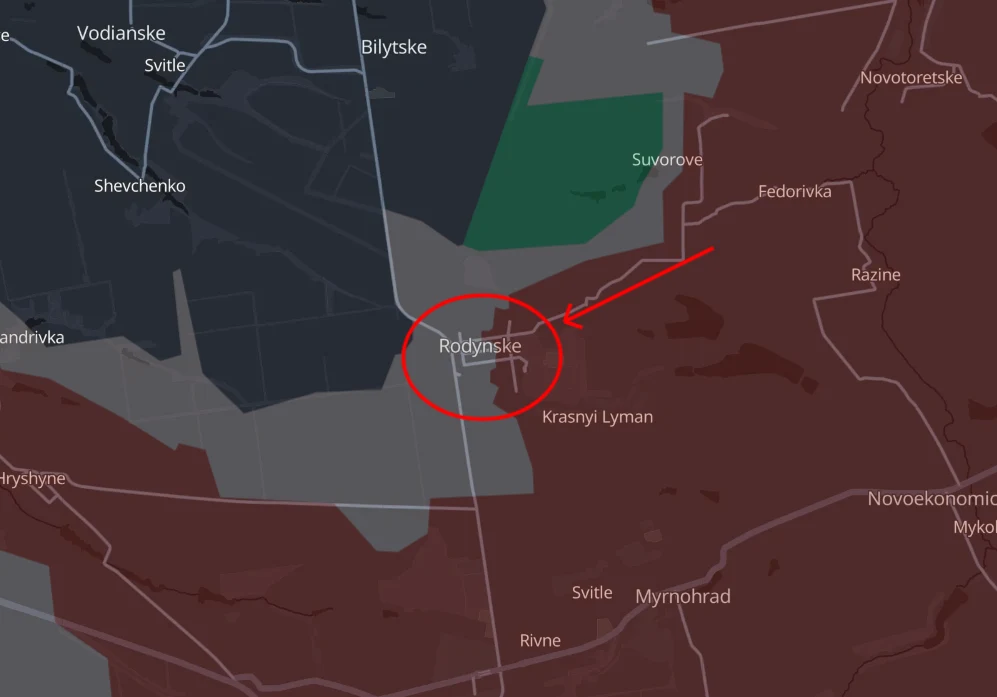
The primary weight of the Russian advance is currently directed at the settlement of Rodynske, which serves as a foundational anvil for potential future pushes toward the logistical infrastructure of Dobropillya. Simultaneously, the situation within Kostiantynivka continues to degrade due to Russia’s systematic infiltration tactics.
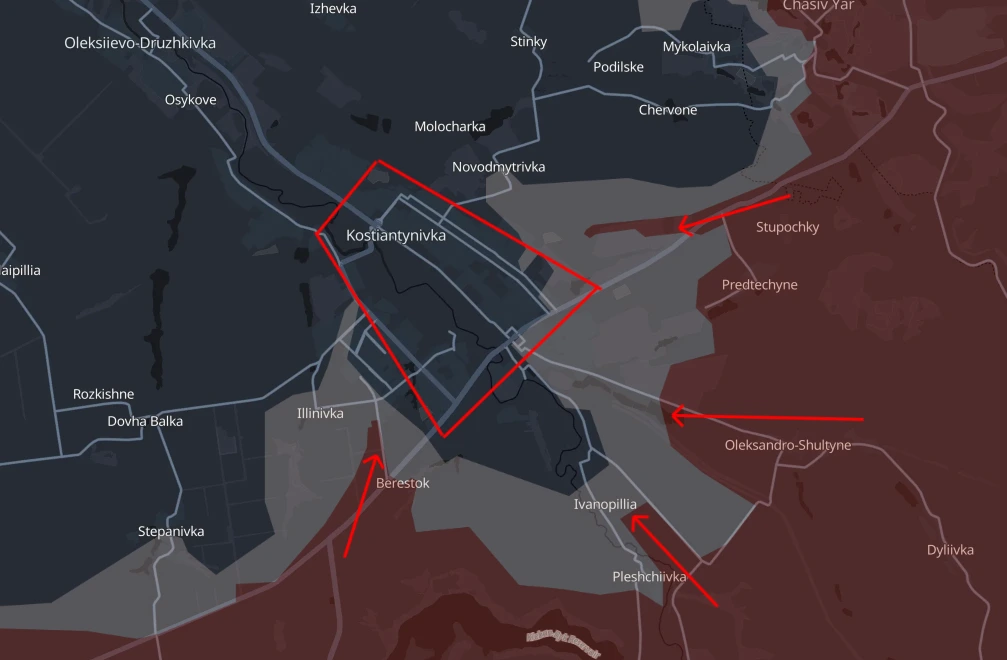
Small Russian infantry detachments routinely filter into peripheral villages to accumulate tactical mass before attempting forward pushes into the city grid. This maneuver is accompanied by the near-total destruction of local structural environments by Russian tube and rocket artillery, effectively converting the municipality into un-defendable rubble.
Dismantling the Ministry of Defense Territorial Fabrications
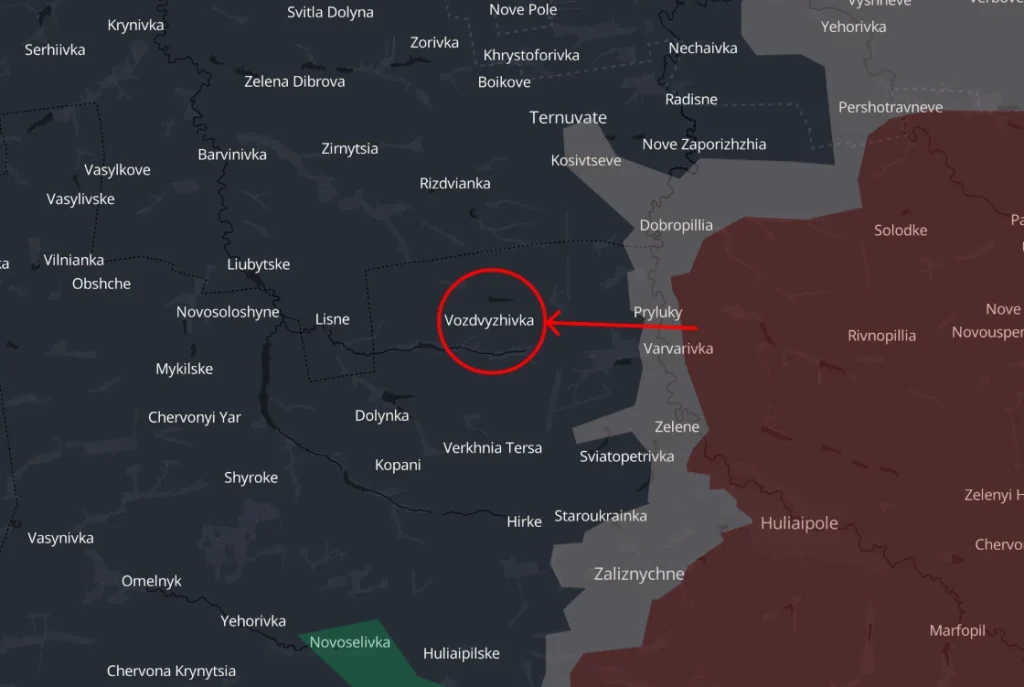
To offset the slow velocity of its conventional advance, the Russian Ministry of Defense has expanded its reliance on demonstrably false territorial claims. The state apparatus officially announced that its forces had successfully captured and occupied the village of Vozdvyzhivka, located northwest of Huliaipole.
Independent geolocation mapping instantly disproved the claim, confirming that the settlement sits more than five kilometers outside the active zone of Russian territorial control. Frontline updates revealed that a small Russian infiltration unit had briefly slipped into the village weeks prior to hoist propaganda flags before being entirely neutralized, liquidated, or taken prisoner by local Ukrainian forces.
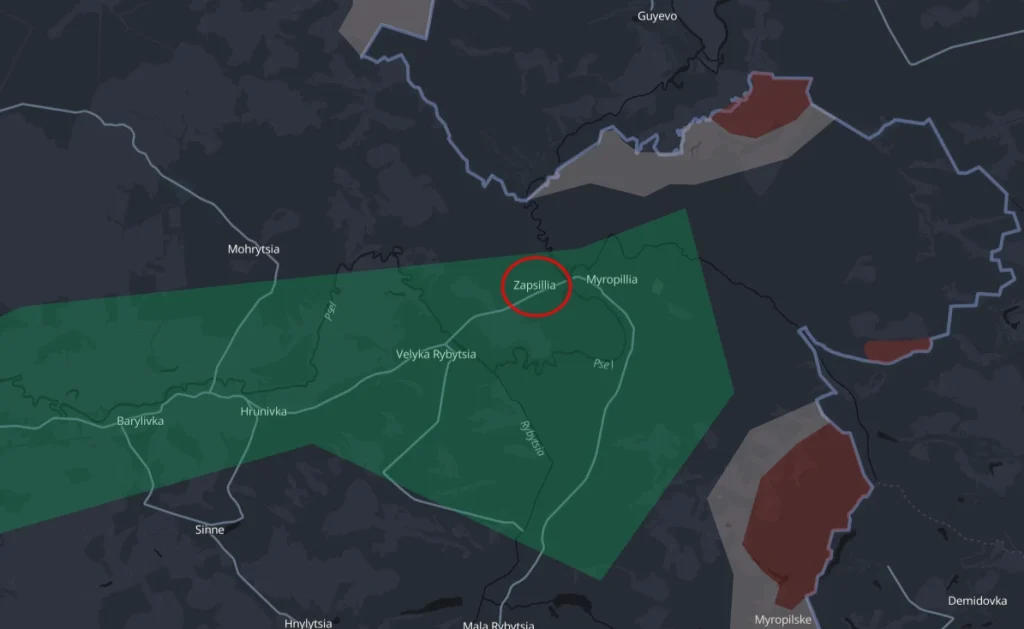
A parallel fabrication regarding the alleged capture of Zapsillia in the Sumy Oblast was aggressively dismantled by the personnel of the 21st Separate Mechanized Brigade, who recorded clear, high-definition video from the absolute center of the municipality, demonstrating that the locality remains firmly under Ukrainian operational control.
The Tactical Exploitation of Civilian Transit and Masked Assets
The information space also witnessed a major exposure of Russian frontline deception methods following an incident on the highway linking Luhansk and Alchevsk. Pro-war regional forums aggressively circulated heavily edited, truncated video footage showing a charred automobile chassis, claiming that a Ukrainian loitering munition had deliberately targeted a peaceful civilian vehicle.
However, the subsequent publication of the unedited (Content Warning 18+), full-length footage exposed a profound institutional lie: the recording began with a flipped Russian military transport truck surrounded by scattered, detonating ammunition crates, followed by a second destroyed military cargo vehicle, an incinerated utility van, and an adjacent military ambulance.
This exposure confirms that Russian military personnel are systematically masking their supply vehicles as civilian transit assets and moving directly within regular civilian traffic flows. Prominent pro-war bloggers have openly encouraged this practice to evade Ukrainian drone tracking, an operational choice that functions as a direct war crime by deliberately converting innocent civilian commuters into human shields.
Continued Russian Terror: Attacks on Civilian Populations and Strategic Infrastructure
The 1555th day of the invasion continues to document the heavy human toll of Russia’s systematic campaign against non-military targets. While the Kremlin frames its air campaign through strategic or defensive rhetoric, the physical reality across Ukraine’s frontline districts and deep interior manifests as targeted civilian casualties and the deliberate destruction of critical life-support networks. This ongoing bombardment serves to pressure the civilian population while attempting to cripple the country’s operational endurance.
Widespread Civilian Casualties and Grid Degradation Across Five Regions
The terrestrial and aerial bombardment of civilian infrastructure intensified across multiple sectors, causing severe casualties. In the Kramatorsk district of the Donetsk region, a brutal strike on the residential sector of Mykolaivka resulted in five civilian fatalities and two injuries. In adjacent areas, another civilian was wounded during the shelling of Belenke, while a targeted drone strike in Druzhkivka claimed one life.
The State Emergency Service of Ukraine also confirmed that Russian shelling in the Chernihiv region caused the death of one man and left another wounded. Meanwhile, the Ministry of Energy reported a tactical drone assault directly targeting an energy repair brigade in the Kharkiv region, injuring two utility workers who were attempting to restore local power lines.
These relentless bombardments on energy infrastructure forced temporary blackouts across five distinct regions, including Dnipropetrovsk, Donetsk, Zaporizhzhia, Sumy, and Kharkiv. Additionally, regional military administrators in the Dnipropetrovsk region reported six civilian injuries due to separate heavy artillery barrages, emphasizing the indiscriminate geographic spread of the daily terror campaign.
Peskov’s Rhetoric on ‘Systemic’ Bombardments and Russian Production Ceilings
Amid growing expectations within pro-war circles for an absolute escalation, Kremlin spokesperson Dmitry Peskov addressed the regularity of Russian strikes on Kyiv, offering a calculated semantic defense of the air campaign. Responding to statements regarding threats against the capital, Peskov stated that “systemic” operations do not equate to daily actions, effectively tempering expectations for consecutive mass bombardments.
This rhetorical pivot is directly tied to acute domestic manufacturing limits rather than strategic restraint. The recent mass assault on Kyiv alone expended roughly half of Russia’s monthly Iskander ballistic missile production, rendering consecutive attacks of that scale technically impossible for the Russian Aerospace Forces.
Consequently, nationalist Russian Z-bloggers expressed deep disappointment over the lack of immediate follow-up strikes on Kyiv’s decision-making centers, resorting to online memes to vent their frustration over the perceived inaction. This structural pause underscores the reality that Russia is operating at the absolute limit of its conventional capabilities, relying on weapons delivered straight from factory lines with no industrial capacity to significantly expand its high-precision rocket stockpiles.
International Proliferation: African Theater Exploitation and the Afghan Alliance
The geopolitical boundaries of the confrontation have expanded far beyond the European continent, as the Kremlin increasingly seeks out unconventional alliances and international proxy environments to sustain its material resource loops.
Russian Cluster Munition Proliferation in Northern Mali
A rigorous international investigation conducted by Bellingcat and its regional investigative partners has uncovered definitive physical evidence of Russian-manufactured weapons violations within the West African nation of Mali. Visual data extracted from the northern village of Tajmart confirmed the presence of unexploded Russian ShOA-05 cluster submunitions, which are delivered exclusively via heavy RBK-500 cluster bomb containers.
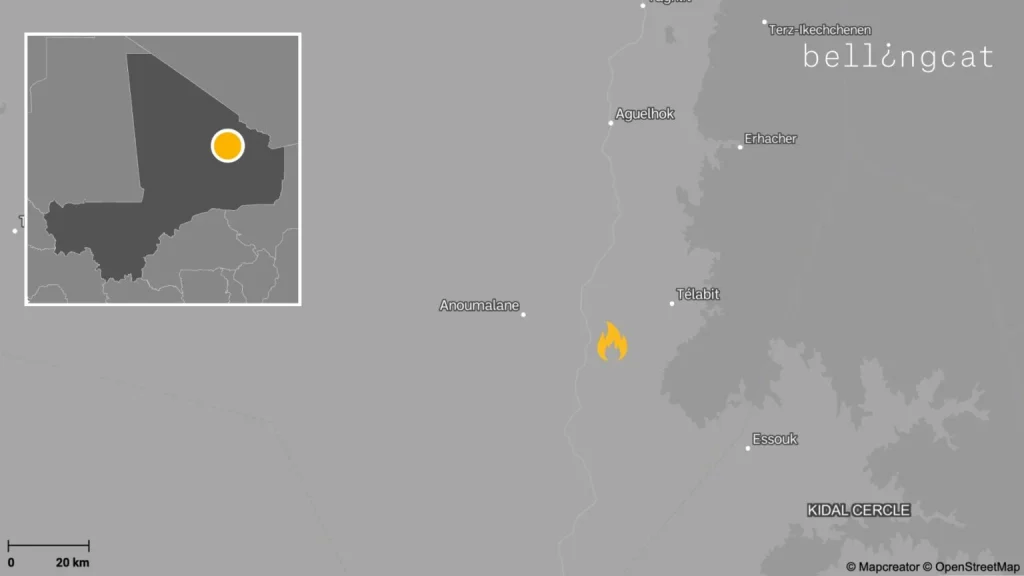
Because Mali is a formal state signatory to the international Convention on Cluster Munitions, which strictly prohibits the storage or use of such indiscriminate weaponry, the deployment of these assets against regional populations constitutes a severe breach of international legal frameworks.
Satellite imagery verified the presence of advanced Su-24M strike aircraft at the international airport in Bamako, confirming that the Russian state-directed African Corps is actively equipping the local military junta with banned conventional hardware to execute high-casualty bombing campaigns.
Les mercenaires continuent de larguer des bombes sur des maisons et certains diront pourquoi se révolter contre ces genres des pratiques inhumaines ne respectant aucun Droit. https://t.co/5jynKwUgeW pic.twitter.com/nB3ym4yooc
— Mohamed Lilly (@MedLilly1) May 17, 2026
The Moscow-Taliban Military-Technical Partnership
Simultaneously, the Russian administrative apparatus finalized a controversial military-technical cooperation agreement with the Taliban regime of Afghanistan during an international security forum hosted in the Moscow region. The formal treaty followed high-level negotiations between the Secretary of the Russian Security Council, Sergei Shoygu, and Taliban Defense Minister Mohammad Yaqoob, the son of the group’s founder.
While the exact material clauses of the agreement remain highly classified, intelligence analysts emphasize that Russia is primarily seeking to exploit the massive graveyards of legacy Soviet armored vehicles and hardware left behind in Afghanistan following the 10-year Soviet-Afghan War.
Faced with severe industrial component shortages at home, the Kremlin intends to harvest these historical storage sites for critical spare parts and engine blocks. To facilitate this unconventional supply chain, the Supreme Court of the Russian Federation officially suspended the long-standing domestic classification of the Taliban as an active terrorist organization.
Domestic Deterioration, Financial Squeezes, and Institutional Violence
The escalating structural costs required to preserve the Kremlin’s prolonged invasion have begun to trigger deep, systemic distortions within the economic and social architecture of the Russian interior. The state’s strict prioritization of military expenditures has forced a severe reduction in civilian public resources.
Refining Deficits, Belorussian Imports, and Impending Export Bans
The structural damage inflicted on the Russian domestic energy refining sector by successive Ukrainian drone incursions has caused an acute contraction of internal fuel supplies. Industry disclosures published by Kommersant reveal that Russian purchases of Belorussian gasoline on the St. Petersburg exchange spiked to 17,300 tons in May, marking a near six-fold increase compared to historical baselines.
Russian commercial buyers are forced to absorb extreme financial premiums, purchasing Belorussian fuel at over 104,000 rubles per ton, while domestic Russian variants are pegged at significantly lower values. Because the output of the primary Belorussian refining installations is mathematically insufficient to cover the mounting deficits of the Russian internal market, the Kremlin is preparing an emergency federal decree to completely ban the export of diesel fuel and aviation kerosene, expanding an existing gasoline export prohibition that is currently enacted through the end of July.
Siluanov’s Domestic Austerity and the Impending Budget Cuts
The domestic financial reality of these combined crises was officially detailed by Finance Minister Anton Siluanov, who announced a sweeping reorganization of federal spending parameters. Siluanov explicitly confirmed that the Russian state will enforce absolute fiscal restraint across every single administrative sector that does not directly involve military production, internal state security, or baseline social obligations.
The structural adjustments will enforce an immediate reduction in federal credit allocations to regional governments, alongside the systematic cancellation of infrastructure projects, corporate subsidies, digital expansion initiatives, and civilian procurement programs.
Financial models published by Bloomberg indicate that this domestic spending freeze, which amounts to a 10% horizontal cut across non-essential spending, will drain over 2 trillion rubles from the civilian economy, an austerity drive designed entirely to patch a federal deficit that recently reached a record-breaking 6 trillion rubles. To prevent immediate domestic political instability, the Ministry of Finance intends to delay the formal legislative implementation of these severe budget cuts until the conclusion of the spring legislative elections.
Digital Suppression, SORM Extensions, and the Fall of Telegram Engagement
To contain the social fallout of these economic adjustments, the state security organs have intensified their regulatory assault on the domestic digital environment. The Ministry of Digital Development issued an expansive, 69-page directive that vastly expands the scope of the System for Operational-Investigative Activities (SORM).
Under the updated framework, telecommunications operators are now legally required to provide state security services with direct, automated access to users’ private passport profiles, localized physical addresses, individual taxpayer identification numbers, and comprehensive banking data.
Concurrently, Roskomnadzor implemented aggressive new cryptographic blocks against proxy protocols and electronic fingerprints, a digital offensive that successfully precipitated a 47% drop in total weekly views across the Russian segment of Telegram, alongside a 58% collapse in engagement metrics for the country’s largest independent news channels.
Severe Institutional Abuses: Forced Invalidation Contracts and the Murder of Viktoria Roshchyna
The internal degradation of the state’s legal and humanitarian frameworks was brutally highlighted by official findings presented before the Ukrainian National Police and parliamentary investigative committees. Forensic medical examinations finalized upon the returned remains of captured Ukrainian journalist Viktoria Roshchyna confirmed that Russian security forces broke her occipital bone during her confinement within the notorious SIZO-2 detention facility in Taganrog.

The investigation proved that Roshchyna was subjected to systematic physical torture, severe starvation regimes, and deliberate medical neglect before her death in transit. When her body was repatriated to Ukraine, Russian authorities had surgically removed her internal organs, brain tissue, and eyeballs to intentionally compromise subsequent international forensic audits.
Simultaneously, internal structural decay within the Russian military recruitment apparatus was exposed via a video recorded by the personnel of the 1442nd Motorized Rifle Regiment. The unit commanders openly rebelled against their regional mobilization boards by filming four newly arrived conscripts deployed by the “Sirius” recruitment center in Omsk.
The medical documentation verified that the state had certified these men as fully fit for active combat duties despite the fact that one conscript suffered from severe brain damage that paralyzed his speech, another possessed an advanced bone infection, a third entirely lacked fingers on both hands, and the fourth had undergone a partial foot amputation. The conscripts testified that they were forced to sign military contracts under extreme psychological duress while being intentionally intoxicated by state verbers.
State-Backed Youth Militarization in the Far North
The long-term orientation of the Russian state toward perpetual conventional conflict was vividly illustrated during public graduation events hosted inside the Murmansk Ice Palace. The regional administration, working in direct coordination with the state-directed paramilitary center “Voin,” forced high school graduates to operate combat drone simulators during their formal farewell ceremonies.

The organization, which was established via a direct presidential decree and currently operates across seventeen sovereign Russian provinces and four occupied zones of Ukraine, is explicitly mandated to convert the next generation of youth into active military assets. Independent human rights advocates have issued urgent warnings to regional parents, emphasizing that these state-backed youth programs function as a core element of the Kremlin’s expanding military infrastructure, designed exclusively to channel underage citizens directly into future frontline attrition campaigns.
This historical and analytical overview is written based on the material from Michael Nacke’s YouTube channel →