
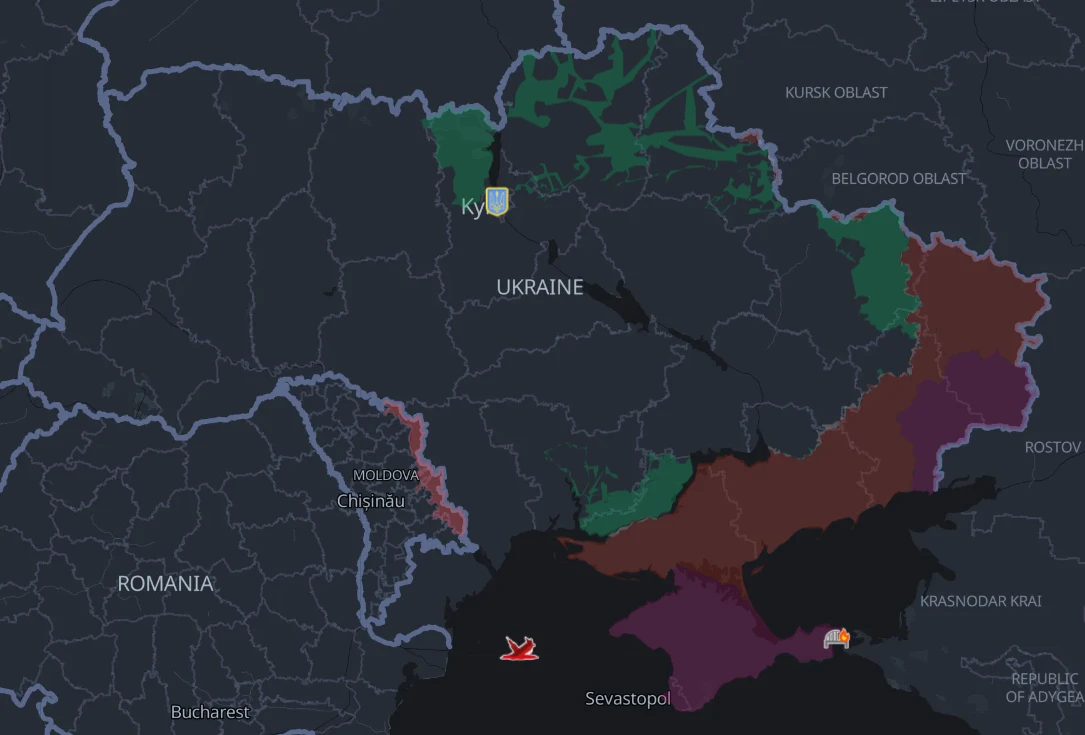
A comprehensive macro-analytical report documenting the military, economic, and diplomatic developments on the 1554th day of the full-scale invasion of Ukraine, recorded on May 26-27, 2026. This edition details the systematic expansion of Ukraine’s long-range strikes against Russia’s domestic infrastructure, the deployment of innovative autonomous delivery systems, severe structural shifts within the NATO alliance, and the cascading domestic crises eroding the Russian political and economic interior.
Asymmetric Deep Strikes and the Technological Degradation of Russia’s Industrial Core
The air campaign launched by Ukrainian autonomous forces has achieved unprecedented depth, penetrating critical military-industrial and energy infrastructure nodes deep within the sovereign territory of the Russian Federation. These operations demonstrate a calculated transition from sporadic infrastructure harassment to a coordinated, high-tech campaign designed to systematically dismantle the economic mechanisms that fund and equip the Russian invasion force.
The operational geographic scope of these overnight incursions reflects a profound expansion of Ukraine’s long-range strike capabilities. By targeting highly specialized factories, oil refining facilities, and strategic aviation assets simultaneously, the Ukrainian General Staff has forced the Russian air defense apparatus into a state of extreme spatial overextension.
The Spatial Expansion of High-Velocity Attrition
Throughout the overnight and early morning hours of May 27, 2026, a coordinated wave of Ukrainian long-range loitering munitions and missile assets executed successful strikes across a sprawling network of target coordinates. Documented detonations and severe structural fires were confirmed in Makiivka, Taganrog, Voronezh, Tuapse, and Sevastopol. In Makiivka, a critical regional fueling hub was compromised when the large “Sprint” petroleum station on the Danilov highway was entirely incinerated.
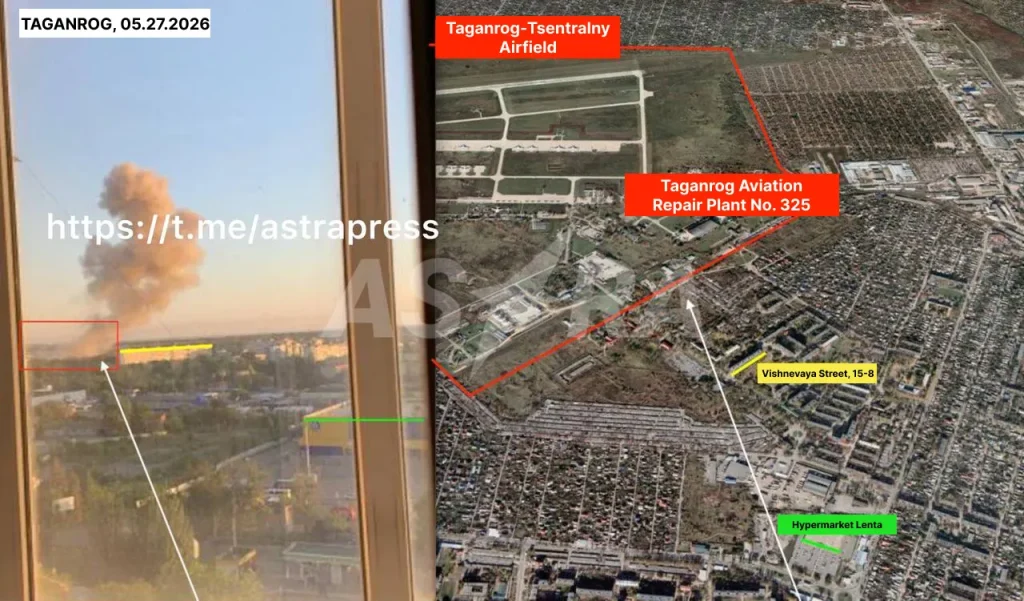
Further north in Voronezh, Ukrainian strike packages successfully penetrated the defensive perimeter of the “Baltimor” military airfield, home to the 47th Guards Bomber Aviation Regiment, which routinely deploys strategic strike aircraft to launch guided aerial bombs against Ukrainian municipal centers. Meanwhile, the coastal city of Taganrog witnessed severe secondary explosions at the 325th Aviation Repair Plant, an internationally sanctioned facility responsible for the structural maintenance of the Russian Aerospace Forces’ transport and combat aircraft fleets.
High-Altitude Aerostats and the New Terminal Guidance Vector
The air operations over occupied Sevastopol unveiled a highly sophisticated tactical innovation that caught regional radar installations completely unprepared. Ukrainian forces have successfully integrated the use of small-sized automated aerostats (MRSHA) to bypass dense coastal electronic warfare networks. These specialized low-signature balloons ascend to a stabilized altitude between 5,000 and 7,000 meters, drifting silently over the designated target zone before mechanically releasing high-speed, electrically powered kamikaze drones.
By utilizing these high-altitude platforms as aerial motherships, the drones preserve their battery capacity for the terminal guidance phase, allowing them to dive onto high-value targets from unexpected vectors. This deployment resulted in severe kinetic impacts against Russian naval infrastructure, prompting a wave of panic among pro-war analysts who note that standard air defense radars are structurally unsuited to tracking slow-moving, non-metallic atmospheric balloons.
The Record-Breaking FPV Interdiction at Triple-Digit Range
The operational parameters of tactical unmanned aviation were completely redefined following verified disclosures from Ukrainian volunteer networks, which documented an unprecedented FPV drone strike executed at a record-breaking distance of 102 kilometers.
Operating deep within the enemy’s contested tactical rear, Ukrainian drone operators successfully tracked, intercepted, and completely neutralized a moving Russian “Bukhanka” military transport van.
This milestone entirely shatters previous military assumptions regarding the electronic and battery limitations of first-person-view loitering munitions. It transitions what was once a short-range frontline asset into a highly effective weapon of operational-depth interdiction.
This record-breaking engagement highlights an expanding technological gap between the two warring forces, especially when contrasted against contemporary developments in the Russian unmanned sector.
While state-aligned Russian military channels have recently celebrated the field deployment of fiber-optic guided drones boasting a maximum operational reach of 40 kilometers, Ukrainian developers have effectively tripled that operational radius through advanced signal relay arrays and alternative communication frequencies.
This continuous technological expansion is driven heavily by decentralized crowdfunding initiatives, such as the Serhiy Sternenko Foundation, which recently secured over 60 million hryvnias for classified drone programs. These efforts ensure that Ukrainian operators systematically maintain a decisive technological edge far beyond the line of combat.
The Disruption of the Microelectronics Monolith at Zelenograd
Beyond the immediate destruction of energy infrastructure, open-source intelligence collectives have finalized an extensive damage assessment regarding the mid-May strike on the “Angstrem” microelectronics factory in Zelenograd, situated on the outskirts of Moscow. Satellite imagery and internal photographic evidence compiled by the CyberBorosno project verify that the strike package hit the facility with surgical precision. The kinetic impact completely obliterated the specialized water purification infrastructure and tore through the primary manufacturing hall of the facility.
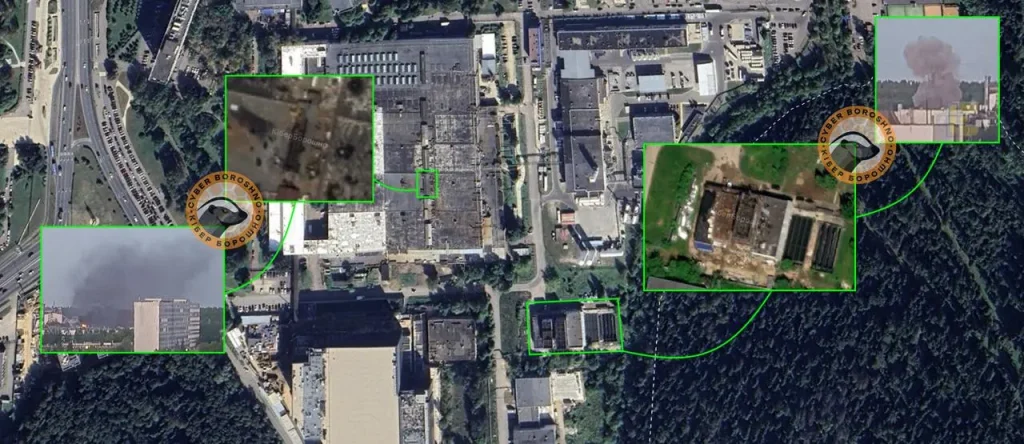
The “Angstrem” plant functions as the absolute core of Russia’s domestic microelectronics industry, possessing an active manufacturing capacity of approximately 80,000 silicon wafers annually. Because this specific facility is responsible for producing the foundational microchips utilized in Russia’s modern guided missiles, optical equipment, and electronic warfare systems, the physical degradation of its specialized, heavily sanctioned manufacturing machinery deals a severe, long-term blow to the Kremlin’s domestic defense production capacity.
Corporate Desperation and the Demand for Industrial Militarization
The continuous, unmitigated penetration of Russia’s internal corporate infrastructure has driven the domestic business elite into a state of profound institutional anxiety. During an official, televised meeting with Vladimir Putin, Alexander Shokhin, the influential chairman of the Russian Union of Industrialists and Entrepreneurs (RSPP), issued an unprecedented administrative demand. Shokhin officially requested that the Kremlin immediately establish a legal mechanism allowing private corporations to directly purchase large-caliber anti-aircraft weaponry, military-grade electronic jamming suites, and tactical laser systems to protect their individual factories.
Shokhin openly complained that the regular armed forces are entirely incapable of providing adequate air defense shielding for commercial infrastructure. He further noted that the state’s recent legislation allowing the mobilization of civilian reserve units to guard factories has descended into bureaucratic chaos, as these guards are routinely reassigned by the military, leaving multi-billion-ruble oil refineries and chip factories entirely defenseless against incoming drone swarms.
The Human Cost: Persistent Russian Attrition and Civilian Terror
Regardless of high-level geopolitical maneuvers, technological records, or experimental missile deployments, the daily reality of the conflict remains defined by the continuous, indiscriminate bombardment of Ukrainian civilian areas.
The Russian high command continues to direct artillery, loitering munitions, and guided aerial bombs against non-military targets. This maintains a systematic campaign of urban terror that directly contradicts Moscow’s official rhetoric regarding precision strikes exclusively on military hubs.
Multi-Axis Aerial Bombardment in the Dnipropetrovsk Region
The Dnipropetrovsk region faced severe operational pressure as Russian forces executed nearly 20 separate tactical strikes over a single daily cycle. This multi-axis assault utilized a volatile combination of attack drones, tube artillery, and heavy guided aerial bombs to target residential sectors across two major provincial districts.
In the Nikopol district, the kinetic impacts resulted in three documented civilian casualties, including a 17-year-old boy and a 62-year-old man who required urgent medical intervention.
Concurrently, heavy shelling inside the Synelnykove district caused severe structural damage to residential spaces. The attacks resulted in the emergency hospitalization of a 47-year-old woman and left multiple elderly residents wounded at the scene.
Escalating Fatalities in Kharkiv and the Kinetic Targeting of Odesa Port
The human toll of the bombardment campaign further intensified in the northeastern theater. Local administrative leads confirmed escalating fatalities in the town of Derhachi, located within the Kharkiv region.
Following a heavy strike, a 25-year-old civilian succumbed to catastrophic injuries in the hospital, raising the local death toll to two individuals. Meanwhile, 19 other residents remain wounded with varying degrees of trauma.
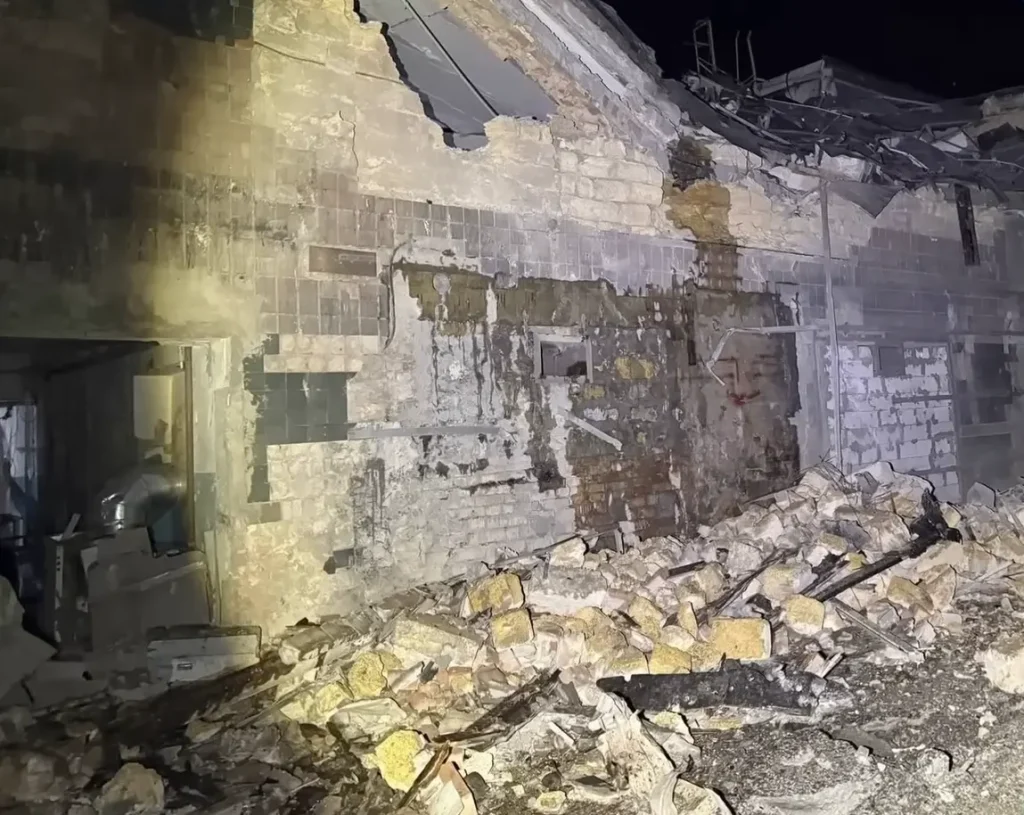
Simultenedly, the southern maritime hub of Odesa became the target of a concentrated evening strike that damaged vital civilian infrastructure, resulting in one fatality and three severe injuries.
Visual data captured during the raid documented the exact moment a Russian combat asset directly struck the historic sailing training frigate Druzhba docked within the Odesa port.
The kinetic targeting of a non-military maritime training vessel, reportedly executed using a combination of aerial platforms and two specialized naval attack drones, serves as a stark illustration of the state’s ongoing campaign against Ukrainian civil life.
These continuous daily casualties confirm that the Russian military apparatus maintains its uninterrupted terror against the Ukrainian population for the fifth consecutive year. This campaign remains completely detached from any viable strategic military objectives.
Interceptor Depletion and the Mathematical Reality of Ballistic Incursions
While Ukraine continues to demonstrate absolute technological innovation in its long-range drone campaign, the defensive posture of its frontline regions faces acute operational strain. The extreme intensity of Russia’s tactical ballistic missile deployments has exposed critical vulnerabilities within Western logistical supply lines.
The structural reality of the air war has entered a phase of mathematical attrition where the production velocities of defensive interceptors are being severely outpaced by the manufacturing output of enemy strike platforms. This imbalance presents the Ukrainian Air Force command with a severe challenge in preserving both urban populations and frontline military assets.
The Interception Deficit and Bloomberg’s Statistical Audit
An extensive statistical report published by Bloomberg has revealed that during the recent operational cycle in May 2026, the Ukrainian Air Defense Command successfully intercepted less than one-third of all Russian Iskander-M tactical ballistic missiles. The defensive breakdown is even more pronounced outside the heavily fortified airspace of the capital.
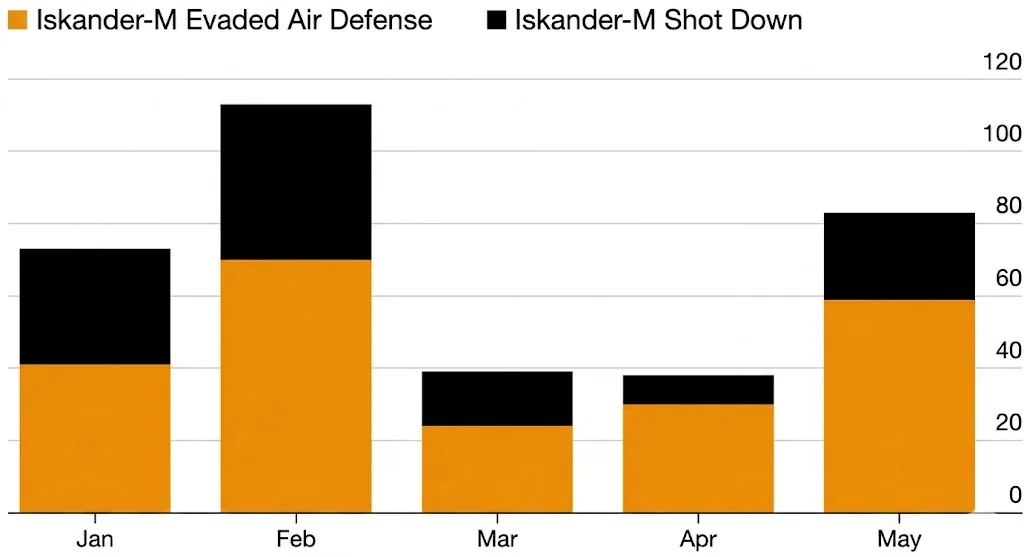
During a concentrated Russian bombardment on May 18, regional air defense units failed to neutralize a single one of the fourteen incoming Iskander-M projectiles launched against provincial infrastructure hubs. Air Force spokesperson Yuriy Ihnat confirmed this critical deficit, explaining that successive waves of Russian saturation attacks have successfully exhausted regional stockpiles of advanced Western interceptors, leaving vital municipal centers increasingly exposed to high-velocity kinetic impacts.
The Global Production Bottleneck of PAC-3 Interceptors
The core driver behind this defensive vulnerability is an acute global manufacturing bottleneck that cannot be easily resolved by financial allocations alone. According to intelligence estimates from the Main Directorate of Intelligence (HUR), the Russian Federation currently manufactures approximately 60 Iskander-M ballistic missiles every single month, allocating more than 41% of its entire long-range strike budget to this specific high-velocity platform.
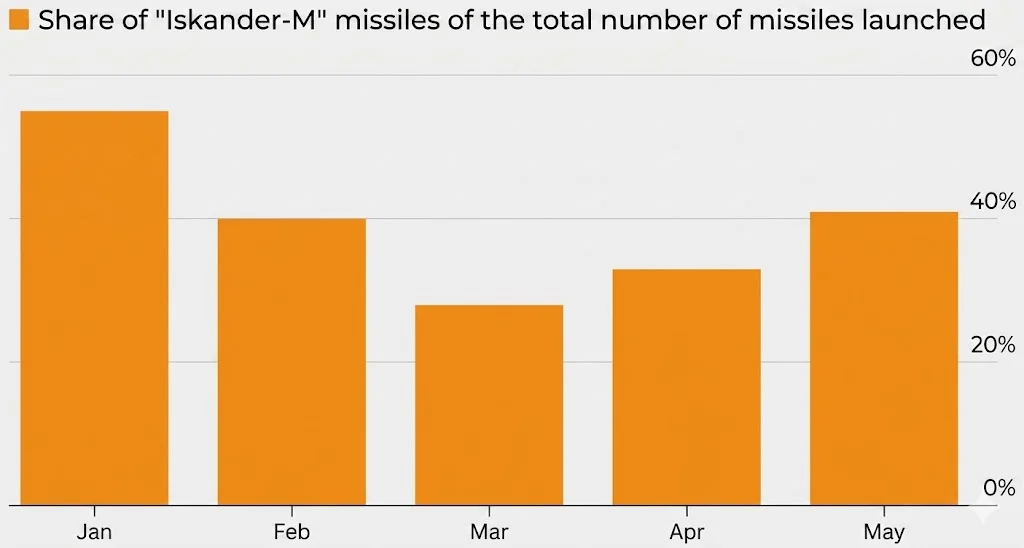
In stark contrast, the total global production volume of the elite PAC-3 interceptor missiles for the MIM-104 Patriot system is strictly limited to roughly 700 units per year across the entire planet. Furthermore, because the United States military has redirected a massive percentage of this annual output to replenish its own domestic stockpiles following its recent extended maritime engagements with Iran, the volume of interceptors arriving in Ukraine remains profoundly insufficient. This mathematical reality reinforces the strategic assessment that the only viable method to neutralize the ballistic threat is to shift from striking incoming missiles to systematically destroying the mobile transporter-erector-launcher (TEL) vehicles directly at their production sites deep inside Russia.
Territorial Stagnation, Frontline Fluctuations, and the Logistical Strangulation of the South
On the terrestrial theater of operations, the strategic initiative has entered a phase of complex reallocation. While the regular Russian armed forces continue to exhaust their mechanized reserves in high-casualty frontal assaults, Ukrainian autonomous strike units have successfully established an operational chokehold over the critical supply lines feeding the southern occupation army.
The terrestrial campaign is increasingly defined not by sweeping territorial maneuvers, but by the systematic destruction of operational logistics. This shift has successfully limited the offensive capabilities of the Russian regional commands, forcing them onto the defensive across multiple vital axes.
The Low-Velocity Attrition of the Russian Spring Offensive
Granular tracking data compiled by Clement Molin and verified by the DeepState project confirms that the month of May has registered the lowest rate of Russian territorial acquisition since early 2024. Throughout the entire multi-axis spring offensive, the Russian military command succeeded in capturing a grand total of only 31 to 35 square kilometers of Ukrainian territory, a metric that indicates a near-total exhaustion of immediate offensive velocity.
Plusieurs graphiques montrant l'évolution du nombre de km2 capturés par l'armée russe ces derniers mois :
— Clément Molin (@clement_molin) May 26, 2026
Sources : @Black_BirdGroup, @AMK_Mapping_ et @Deepstate_UA.
Ces 5 derniers mois, la progression russe s'est largement ralentie sur l'ensemble du front ukrainien. On parle… pic.twitter.com/L3a9uVn5iS
More than six months have elapsed since the fall of regional strongholds like Pokrovsk, Siversk, and Huliaipole, yet Russian frontline units remain completely static outside minor settlements. For weeks, Russian mechanized columns have been completely repelled near Rai-Oleksandrivka, entirely preventing the Kremlin from initiating its long-planned siege operations against the major urban fortresses of Sloviansk and Kramatorsk.
The Expansion of the Ukrainian Southern Counter-Offensive
While the Russian advance has effectively stalled, the Armed Forces of Ukraine have successfully executed a series of localized counter-offensives across the Zaporizhzhia and Donetsk operational directions. Pro-war Russian military bloggers have reluctantly confirmed that Ukrainian tactical formations have broken through established Russian lines to expand their zone of control near the strategic settlements of Prymorske and Stepnohirsk.
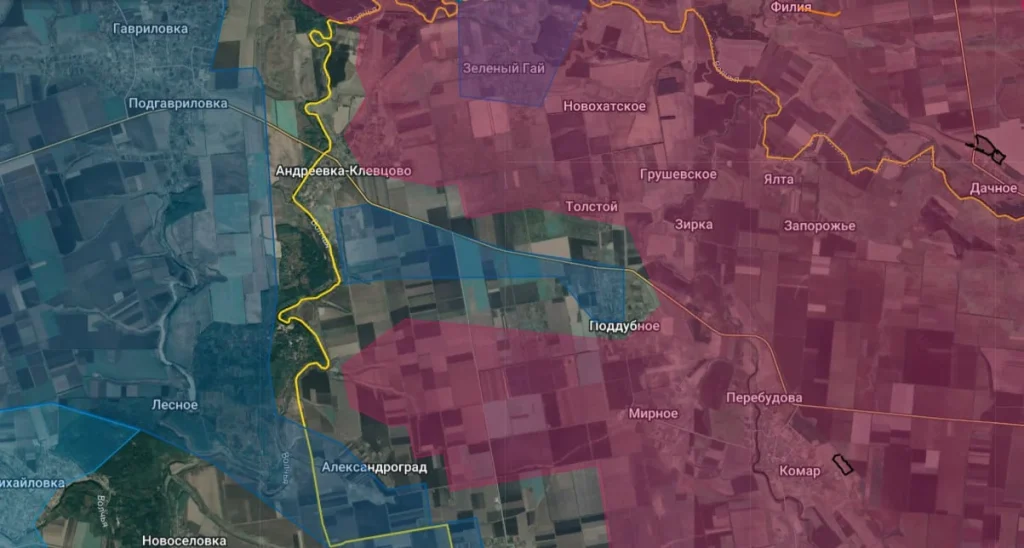
Further east, Ukrainian mechanized units successfully secured high-ground positions within the village of Poddubne, precipitating a highly fluid combat environment characterized by tactical analytical groups as a “layered cake.” In this sector, the lines of contact have become entirely intertwined, with isolated pockets of Russian and Ukrainian infantry alternating across the local landscape, a structural development that has shattered the cohesion of the Russian regional defensive envelope.
The Corporate Logistics Chokehold on the R-280 Corridor
The most significant strategic development on the southern front is the systematic execution of a deep logistical blockade conducted by the specialized drone components of the National Guard’s “Azov” Corps. An officer from the corps’ autonomous systems management division outlined the underlying operational doctrine defining their deep-interdiction campaign.
Azov patrols the border areas around Mariupol.
— First Corps Azov of the National Guard of Ukraine (@azov_media) May 25, 2026
Ukrainian territory must be free of Russian forces. The surest path to achieving this is pushing the "sanitization zone" for enemy logistics closer to Russia itself and occupied Crimea.
Pilots of the First Corps Azov of the… pic.twitter.com/qJLfZljIks
The primary transit pipeline sustaining Russian forces on the southern front is the R-280 “Novorossiya” highway, which links the Russian interior directly to the logistical hubs of Mariupol and the Crimean peninsula. While individual tactical battalions manage the immediate line of contact and brigades police a 50-to-70-kilometer depth, the “Azov” Corps has assumed responsibility for executing deep-penetration “middle-strikes” operating at a range between 70 and 150 kilometers.
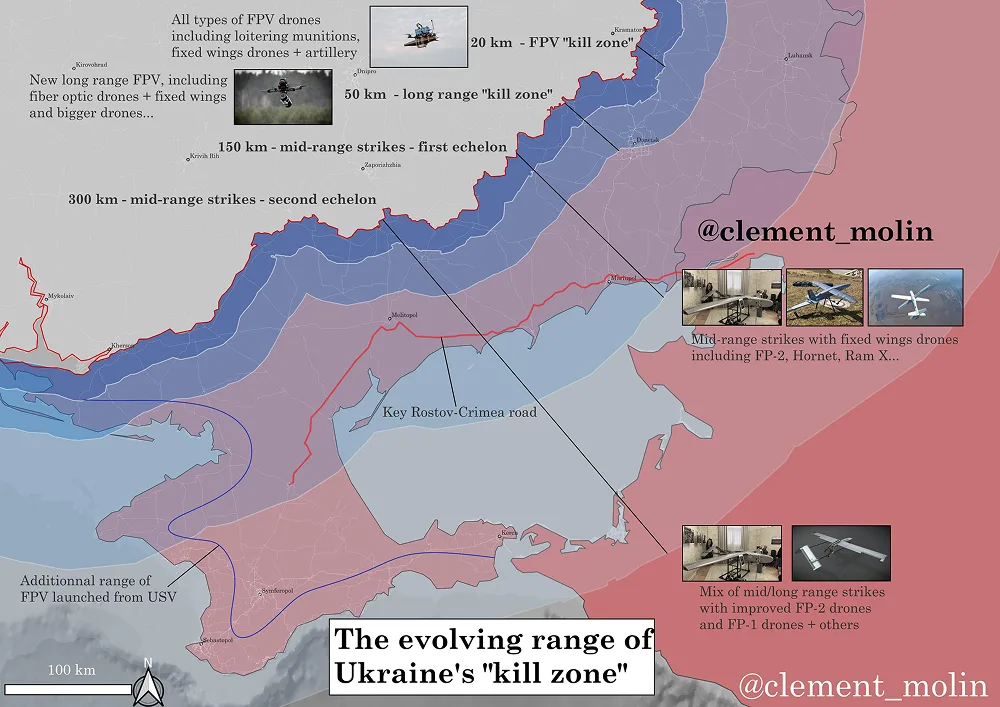
Utilizing advanced, long-range “Hornet” strike drones, these autonomous units have established continuous aerial monitoring over the entire highway network. Over the past weeks, independent tracking by military researchers has geolocated more than 100 successful drone strikes targeted exclusively against heavy military transport cargo vehicles, ammunition trucks, and fuel tankers. The primary strategic objective is not a total halt of transit, but a sustained 70% to 75% reduction in overall cargo volume. This targeted strangulation has successfully deprived the Russian military base at Mariupol of necessary supplies, directly impacting the combat sustainability of Russian frontline units across the entire southern theater.

The Mythology of the Oreshnik and the Fabrications of State Propaganda
Faced with a total lack of meaningful territorial progress on the ground and mounting losses within its logistical networks, the Russian state apparatus has been forced to rely on the manufacturing of exaggerated military narratives. The state has increasingly utilized its official media platforms to simulate technological breakthroughs and manipulate public perception regarding its experimental weapon programs.
The reliance on media fabrication underscores a growing institutional anxiety within the Kremlin regarding domestic morale. As the physical costs of the war continue to escalate, the state’s messaging has detached from the physical reality of the frontlines, collapsing into easily disprovable propaganda constructs.
The Absurd Multi-Level Factory Justification
Following the international ridicule that targeted the deployment of the experimental Oreshnik IRBM — which successfully expended a multi-million-dollar strategic delivery vehicle to demolish three ordinary automobile garages in Bila Tserkva — the official printing organ of the Russian government, Rossiyskaya Gazeta, published a lengthy pseudo-technical justification. The state’s primary military “expert,” Yuri Knutov, claimed that the strike was an absolute tactical success.
Knutov asserted that the garage cooperative was merely a surface deception masking a massive, multi-level underground Soviet-era metallurgical manufacturing complex hidden deep beneath the earth, where the Ukrainian military was allegedly assembling thousands of long-range drones. The state publication concluded that because this imaginary underground fortress was structurally engineered to withstand a direct tactical nuclear strike, the utilization of the Oreshnik’s immense kinetic velocity was the only mathematical method available to compromise the facility, an explanation that independent engineers quickly dismissed as a total violation of basic structural physics.
The One-Minute AI Satellite Forgeries
This narrative manipulation was accompanied by a massive, synchronized disinformation campaign across pro-war Telegram networks, which widely distributed purported “secret satellite imagery” showing the total destruction of a military airfield in Bila Tserkva following the Oreshnik strike. However, the media operation suffered a humiliating collapse when the administrator of a nationalist Russian channel named “Man from the 90s” publicly admitted to creating the forgeries.
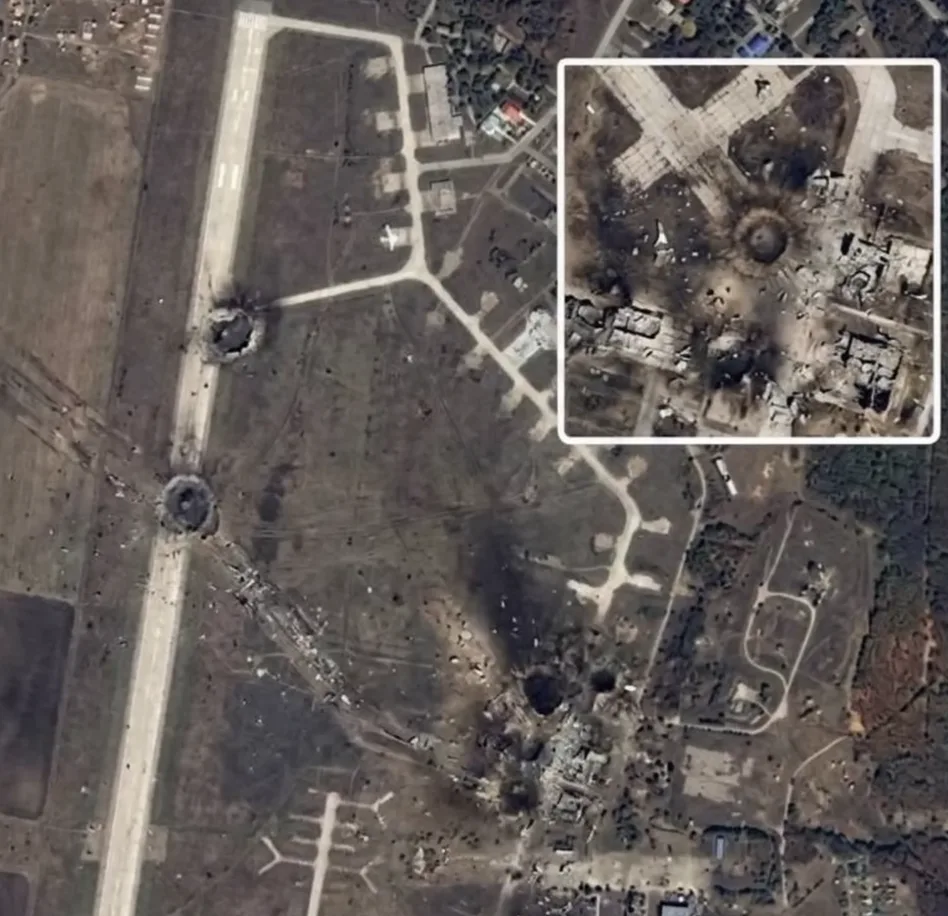
The administrator revealed that he had generated the entirely fictional satellite images using a basic commercial artificial intelligence engine in less than one minute to demonstrate how easily the pro-war audience could be manipulated by state narratives. Independent imagery experts subsequently confirmed that the AI-generated craters appended to the Bila Tserkva images were pixel-for-pixel identical to the fake imagery generated by the same software during recent regional conflicts in Iran, exposing a complete reliance on cheap digital fabrications within the Z-propaganda ecosystem.
International Realignment: The Pentagon’s European Drawdown and the Czech Initiative Fracture
The geopolitical architecture supporting the European continent has entered a phase of historic transformation, driven by radical structural reallocations enacted by the United States defense apparatus. These changes have forced European capitals to rapidly confront the reality of their own conventional defense vulnerabilities without relying on traditional American guarantees.
The strategic pivot executed by Washington has shattered long-standing security assumptions across the continent. As the United States reallocates its primary conventional assets to alternative global theaters, the European Union is being forced into an immediate, high-stakes militarization process.
The Financial Times on Ukraine’s Strategic Initiative and Technological Leverage
According to a detailed analytical feature published by the Financial Times, Ukrainian President Volodymyr Zelenskyy has successfully seized the strategic initiative from both Vladimir Putin and Donald Trump, granting Kyiv unprecedented geopolitical and military leverage. The publication underscores that both the Russian and American administrations originally gambled on a swift, transactional resolution to the conflict, but have instead entangled themselves in deep strategic traps. While Moscow remains bogged down in a grinding war of attrition, Washington has found its conventional military focus heavily split by escalating friction in the Middle East.

In this shifting environment, Ukraine is systematically rewriting the foundational rules of modern asymmetric warfare. Kyiv has demonstrated a remarkable capacity to execute high-impact precision strikes deep within the Russian interior while simultaneously neutralizing Moscow’s hyper-expensive missile assets using low-cost, domestically manufactured interceptor systems.
This wave of local innovation has fundamentally altered Transatlantic defense dynamics; the Pentagon is now actively seeking direct access to Ukrainian military technologies and rapid battlefield innovation loops. Consequently, Donald Trump’s previous assertion that Zelenskyy possesses “no cards” has been completely invalidated, as middle powers now look to Ukraine as the premier global model for successfully resisting structurally superior adversaries.
The Pentagon’s Radical Structural Footprint Reductions
US Secretary of State Marco Rubio officially stated that the US is neither conducting nor planning to conduct negotiations with Ukraine and the Russian Federation, as the conflict will conclude not with a military victory, but with the attrition of one of the parties.
According to specialized investigative disclosures published by the German journal Der Spiegel, the United States Department of Defense has officially presented senior NATO commanders with a revolutionary plan to drastically downsize its conventional military footprint across Europe. While the absolute nominal number of American personnel stationed on the continent will remain unchanged to satisfy domestic statutory restrictions, the Pentagon is executing a massive reduction in the actual combat equipment available to the NATO Supreme Allied Commander.
The radical downsizing model stipulates the immediate removal of one-third of all active American combat fighter jet wings, the complete withdrawal of both operational aircraft carrier strike groups from European waters, and the total removal of all American attack submarines and strategic reconnaissance drone assets from the theater. During tense ministerial sessions, US Secretary of State Marco Rubio explained that Washington must remain realistic regarding its global commitments, choosing to prioritize its naval and air fleets to prepare for the containment of a potential two-front conflict simultaneously across the Asia-Pacific region and the Middle East, a decision that European officials have characterized as a permanent turning point in transatlantic relations.
European Anxiety, WSJ Disclosures, and the German-Dutch Baltic Corps
European security officials, military leads, and intelligence representatives are increasingly monitoring the escalating risk of a broader theater expansion beyond the borders of Ukraine. Reports published by the Wall Street Journal reveal acute anxieties among continental governments that the Kremlin might deliberately trigger a localized confrontation with NATO to construct an external justification for a massive new wave of forced mobilization inside the Russian Federation. This anxiety has been fueled by a sharp escalation in aggressive rhetoric from Moscow directly targeting the Baltic states, including explicit threats directed at decision-making centers in Latvia.

Western intelligence services estimate that the Russian Armed Forces are suffering an attrition rate of approximately 35,000 personnel per month, a casualty dynamic that severely outpaces current voluntary enlistment velocities. To avoid a domestic political backlash from a sudden peacetime draft, the Kremlin appears to be testing the unity and collective defense readiness of the Atlantic alliance. In response to these warnings, a major structural reorganization is unfolding on NATO’s eastern flank.
To ensure rapid reinforcement capabilities, Germany and the Netherlands have officially committed a joint army corps specifically dedicated to the forward defense of Latvia and Estonia. Moving away from the older command model centered in Szczecin, Poland, this newly integrated German-Dutch corps will command between 40,000 and 60,000 high-readiness troops. This tactical reallocation serves as a direct containment mechanism, ensuring that any localized Russian border incursions can be met with immediate, concentrated conventional force independent of shifting political dynamics in Washington.
The Political Fracture Within the Czech Ammunition Initiative
This sudden American drawdown occurs simultaneously with severe structural friction emerging within Europe’s own ad-hoc defense procurement networks. The highly successful Czech Ammunition Initiative — a centralized international funding mechanism that has successfully procured over four million large-caliber artillery shells for the Ukrainian military on the global market since 2024 — has lost half of its international donor states, with active participation collapsing from 18 nations down to nine.
This abrupt funding contraction is directly linked to recent electoral transitions in Prague, where the ascension of populist euro-skeptic Prime Minister Andrej Babiš has led to an immediate reorientation of state resources away from external security assistance toward domestic welfare spending. While European defense leads note that the continent’s regular industrial manufacturing lines have expanded sufficiently to mitigate an immediate shell crisis, the fracturing of the Czech mechanism underscores a growing political instability that the Kremlin is actively attempting to exploit through asymmetrical political influence campaigns.
The Automated Air War on the Belarusian Border
The territorial boundaries of the Republic of Belarus have increasingly transformed into an active zone of kinetic friction and technological containment. The persistent utilization of Belarusian infrastructure to support Russian electronic warfare and logistics has prompted a direct, autonomous counter-campaign from Ukrainian border defense forces.
The tactical stability of the northern border has degraded as Ukrainian autonomous elements systematically target the peripheral monitoring installations of the Minsk regime. This operational pressure serves as a direct warning against further integration with Moscow’s offensive planning.
The Logistical Siege and Electronic Warfare Frictions
According to official administrative reports published by the border security organs of the Minsk regime, Ukrainian autonomous aerial drones executed 116 separate cross-border incursions into Belarusian airspace over a one-week cycle. These operations targeted the automated border surveillance infrastructure and radar installations situated across the Brest and Homiel regions.
Strategic analysts assume that the primary targets of these precise drone raids were specialized signal relay towers utilized by the Russian military to guide loitering munitions toward northern Ukraine. Military observers, including Konstantin Mashovets, emphasize that the Belarusian Armed Forces currently maintain an extremely limited border grouping fluctuating between 2,500 and 4,700 personnel, an allocation that is entirely incapable of launching independent offensive operations without a massive, politically suicidal national mobilization campaign.
Madyar’s Direct Warning to the Lukashenko Regime
The technological containment of the border was accompanied by an explicit, public psychological ultimatum issued by Lieutenant Colonel Robert “Madyar” Brovdi, the Commander of Ukraine’s Forces of Unmanned Systems. Utilizing public communication channels, Brovdi delivered a direct statement addressed to Belarusian leader Alexander Lukashenko, warning that the technological patience of the Ukrainian military regarding Belarusian complicity had been entirely exhausted.

Brovdi explicitly stated that the first 500 high-value strategic targets within the territory of Belarus have been completely mapped and logged into Ukrainian autonomous guidance computers. He issued a practical warning advising the Minsk regime to immediately cease its cooperation with Russian drone logistics, noting that Ukraine possesses the absolute operational capacity to instantaneously neutralize Belarus’s primary oil refining complexes if the northern border is utilized to launch further combined assaults.
Domestic Fiscal Decay and Infrastructure Crises Inside the Russian Interior
The structural strains of sustaining a total war economy for over four years are increasingly manifesting as severe internal crises within the municipal infrastructure and financial apparatus of the Russian Federation. The state’s absolute focus on military expenditures has triggered a rapid decay of baseline civilian administration across distant regional territories.
The financial elite of the state are increasingly incapable of masking the massive structural deficits destabilizing the national economy. As municipal services collapse and inflation erodes public welfare, the internal security environment of the country is showing signs of acute volatility.
The Budgetary Collapse and Profanity in the State Duma
The extreme instability of the Russian federal budget was brought into sharp focus during a turbulent session of the State Duma. Valery Gartung, the Chairman of the Parliamentary Committee for the Protection of Competition, shocked the assembly by utilizing explicit, obscene profanity from the main podium to describe the catastrophic expansion of the federal deficit.
Gartung detailed that the combined deficit over the past two fiscal cycles has surpassed the critical threshold of 11 trillion rubles, with the single month of April 2026 registering a record-breaking monthly deficit of 5.9 trillion rubles, representing 2.5% of the entire national GDP. The parliamentary head openly stated that the government has exhausted all viable fiscal reserves, leaving the central bank with no mathematical alternative other than to return to the hyper-inflationary monetary printing practices of the early 1990s, an admission that triggered an immediate, unsuccessful effort by state censors to scrub the official broadcast logs.
The Primorye Utility Blackout and Rising Protest Metrics
This macroeconomic decay has translated into immediate infrastructure failures across the Russian Far East. The primary regional energy monopoly, the Far Eastern Energy Company (DEK), announced the implementation of sweeping, permanent shutdowns of electricity and hot water infrastructure targeting thousands of residential subscribers across the Primorsky Krai.
The corporate entity justified the mass utility blackouts by revealing that the population’s accumulated household debt has surpassed 5.8 billion rubles due to a systemic collapse in working-class purchasing power. These deteriorating material conditions have driven the domestic protest potential index, tracked by the state-run VCIOM institute, to an absolute post-invasion high of 25 points, marking four consecutive months of aggressive escalation and demonstrating that the civilian population’s historical willingness to tolerate economic destitution in exchange for geopolitical posturing has reached its structural limit.
The Evacuation Cover-Up of the “Sosnovsky Maniac”
The internal security environment of the Russian interior has been further compromised by the ongoing fallout of the Ministry of Defense’s penal recruitment programs. Military police units in the Leningrad Oblast initiated a widespread public manhunt for 41-year-old Andrei Keiko, a convicted serial killer known historically as the “Sosnovsky Maniac,” who was originally sentenced for three brutal murders, eight aggravated rapes, and eleven armed robberies.
Official court records confirm that Keiko was recruited directly out of a maximum-security penal colony by military recruiters in 2024, sustained an operational injury on the frontline, and was Subsequently transferred to a specialized military hospital in Kronstadt. Keiko successfully executed a escape from the facility in the early autumn of 2025; however, the Ministry of Defense systematically covered up the escape of the serial predator for more than six months, completely withholding the information from local law enforcement and civil governance organs until late May 2026, a revelation that has intensified public anger regarding the severe domestic consequences of the state’s military policies.
This analytical report was compiled based on the comprehensive briefing and data analysis provided by Michael Nacke’s YouTube video →