
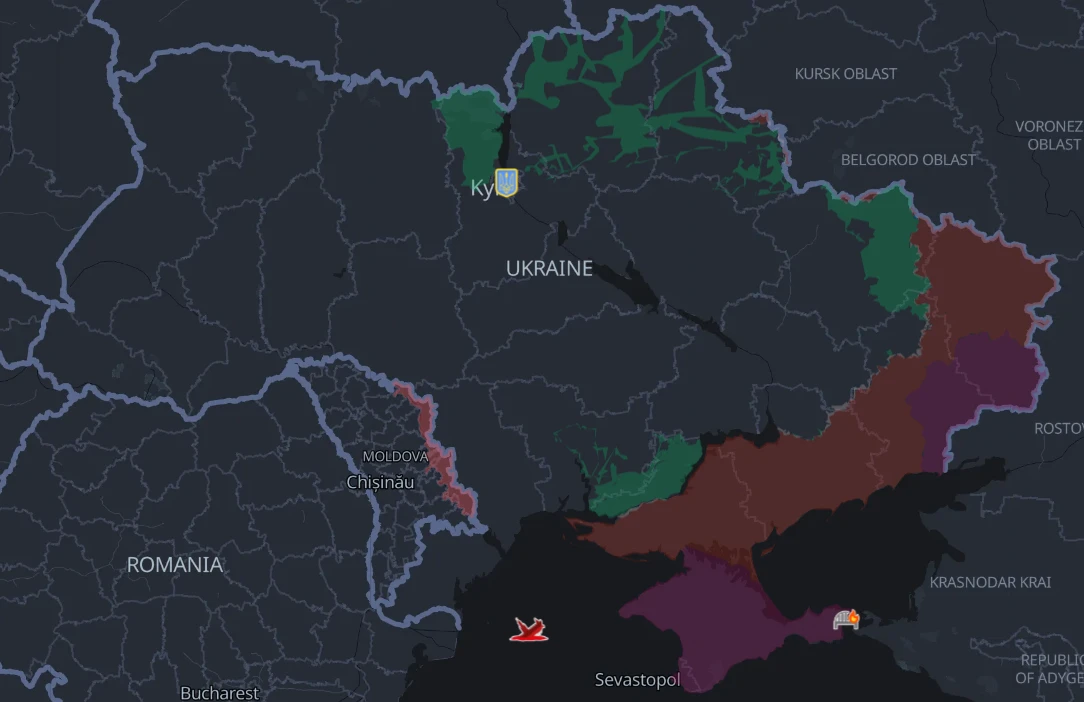
A comprehensive analytical report on the military, domestic, and geopolitical developments of the Russia-Ukraine war, documenting the escalation of aerial warfare, internal fractures within Russian propaganda networks, strategic deep strikes by Ukrainian forces, and unfolding shifting international alignments.
The Mass Aerial Assault on Kyiv and the Tactical Reality of the Oreshnik Missile
The air war over Ukraine reached a critical point of intensity as the conflict crossed its 1,550th day. The Russian Federation unleashed a massive, highly coordinated combined aerial offensive aimed primarily at the capital city of Kyiv and its surrounding oblast. This section details the operational parameters of the attack, its immediate toll on civilian infrastructure, and the third operational deployment of the experimental ballistic missile system known as the Oreshnik.
Scale and Impact of the Combined Incursion
The overnight bombardment of the Ukrainian capital represented one of the most logistically complex aerial operations conducted by Russian forces in recent months. Utilizing a complex mixture of strategic cruise missiles, Shahed-type loitering munitions, and high-velocity ballistic assets, the strike targeted multiple coordinates simultaneously to overwhelm local air defense networks.
According to official dispatches from the State Emergency Service of Ukraine (DSNS), emergency response teams were deployed to more than 40 distinct locations across every administrative district of Kyiv. The sheer volume of incoming projectiles caused structural damage to an array of non-military installations, demonstrating a continued operational focus on creating widespread urban disruption.
Humanitarian and Civilian Consequences
The human and material toll of the bombardment was felt immediately across urban centers. In Kyiv proper, structural damage was verified at a minimum of ten multi-story residential buildings, an educational institution, a student dormitory, a business center, and a major commercial shopping mall.
The Shevchenkivskyi District suffered the most severe concentrated damage, where a direct hit on a five-story apartment complex completely collapsed an entire residential section. Rescue workers extracting survivors from the rubble confirmed civilian casualties, including fatalities. Mayor Vitali Klitschko reported that at least two individuals lost their lives within the city limits, with another 44 sustaining documented injuries.
Beyond the capital, the surrounding oblast experienced parallel devastation, with debris and direct strikes damaging residential property in Vyshhorod, Fastiv, Obukhiv, and Bucha. Among the wounded in the wider region was an infant girl under one year of age, underscoring the indiscriminate nature of the targeting schema.
The Deployment of the Oreshnik IRBM
A central element of this offensive was the deployment of the Oreshnik intermediate-range ballistic missile (IRBM), marking only the third time this specific weapon system has been utilized in combat operations. The system functions primarily as an expensive psychological tool rather than a battlefield game-changer.
Observers in the city of Bila Tserkva captured video footage displaying the distinct signature of the weapon: the mid-air separation of multiple independently targetable reentry vehicles (MIRVs) followed by a rapid succession of kinetic impacts. The strike in Bila Tserkva bypassed the local military airfield entirely, instead obliterating a municipal garage cooperative.
This pattern aligns with the two prior Oreshnik deployments — against Dnipro in November 2024 and Lviv in January 2026 — both of which failed to disrupt critical Ukrainian military infrastructure. This reinforced the analytical assessment that the system lacks strategic efficacy in a non-nuclear configuration.
Public Resilience and Fractures Within the Russian Pro-War Information Space
The psychological objectives of the Russian bombardment encountered immediate resistance from both the local population’s defiance and a wave of cynicism from within Russia’s own analytical networks. This section examines how the civilian population of Kyiv processed the attack and analyzes the significant fractures appearing among prominent Russian military bloggers who openly criticized the efficacy of their own high command’s actions.
Capital Defiance: The Usyk Fight and Public Reaction
The Russian high command’s intention to induce panic through sustained urban bombardment met an unexpected psychological counterweight. On the night of the attack, a vast portion of the Kyiv population remained awake not out of terror, but to watch the undisputed heavyweight boxing match between Ukrainian athlete Oleksandr Usyk and Dutch kickboxing champion Rico Verhoeven at the Pyramids of Giza.
The surreal contrast of public defiance was epitomized by political commentator Mykhailo Shaitelman, who conducted a live broadcast analyzing the match while the audible thunder of anti-aircraft interceptions and missile detonations echoed in the background.
Usyk’s subsequent victory and his immediate post-fight address dedicated to his compatriots waiting out the strikes in bomb shelters served to transform a night of terror into an exhibition of national solidarity.
Fragmenting Narratives: Z-Blogger Outrage and Disillusionment
While state-run television channels in Moscow lauded the strikes as a flawless success, the mood within the nationalist Russian “Z-blogger” telegram community degenerated into bitter criticism. Authors from various military channels openly expressed profound pessimism regarding the strategic value of the entire campaign.
Prominent military correspondent Romanov published a sarcastic review of the Oreshnik strike, mocking official defense ministry press releases by ironically claiming the destruction of “100,500 Nazis and 20 NATO generals.” He concluded that the attack amounted to nothing more than driving “incredibly expensive iron into the dirt for the sake of a pretty picture that no one outside of pensioners believes anymore.”
The popular analytical channel Two Majors echoed this sentiment, noting that launching a cutting-edge ballistic missile at a cluster of civilian garages in Bila Tserkva, rather than a high-value command hub in Kyiv, failed to generate any of the patriotic enthusiasm seen during the missile’s debut in late 2024.
Furthermore, authors from the Dorogaya Khurma channel openly lamented that after years of attacking Ukrainian power substations, the state had failed to achieve either an energy collapse or the elimination of Ukrainian decision-makers.
The Medvedev Statement: Implicit Admissions and Distancing
The internal anxiety surrounding the military utility of these operations extended into the upper echelons of the Kremlin. Deputy Chairman of the Russian Security Council Dmitry Medvedev published a lengthy statement attempting to justify the raid, though his text contained a revealing rhetorical shift.
Medvedev explicitly acknowledged that Russian strikes actively consolidate the Ukrainian electorate around their leadership and motivate Western partners to provide more financial and military aid. He nonetheless argued that the complete destruction of municipal infrastructure was required to break the enemy’s resolve.
Analysts monitoring these official communiqués note that Medvedev noticeably avoided using collective pronouns such as “we launched” or “our forces,” opting instead for detached, impersonal phrasings like “it is necessary to strike.” This linguistic distancing reflects recent Western intelligence reports indicating that members of the Russian political elite are increasingly framing the invasion not as a collective national endeavor, but as “his war” — referring exclusively to Vladimir Putin.
Ukraine’s Asymmetric Retaliation: Direct Hits on Military and Energy Infrastructure
In stark contrast to the symbolic and civilian-heavy targeting choices of the Russian aerospace forces, Ukraine’s military apparatus executed a series of highly precise, asymmetric counter-strikes. This section covers the strategic framework of Ukraine’s mirror-response doctrine and the documented destruction of high-value maritime and logistical energy targets deep within Russian territory.
The Asymmetric Doctrine: Mirroring Strikes on Strategic Targets
Ukrainian defense policy has consistently maintained a doctrine of strict symmetry regarding long-range strikes. When Russia undertakes large-scale campaigns against Ukrainian cities, Ukrainian forces respond by targeting the specific industrial, economic, and military assets that fuel the Russian war machine.
Rather than exhausting resources on psychological operations against civilian populations, the Armed Forces of Ukraine (AFU) leverage their expanding domestic long-range drone fleets to strike deep into Russia’s economic interior. This approach aims to dry up the state’s financial liquidity and disrupt its frontline logistics.
Strategic Disruption: The Vtorovo Pumping Station
A primary example of this targeting precision was the successful deep-penetration drone strike against the Vtorovo oil pumping station located in the Vladimir Oblast, hundreds of kilometers from the Ukrainian border.
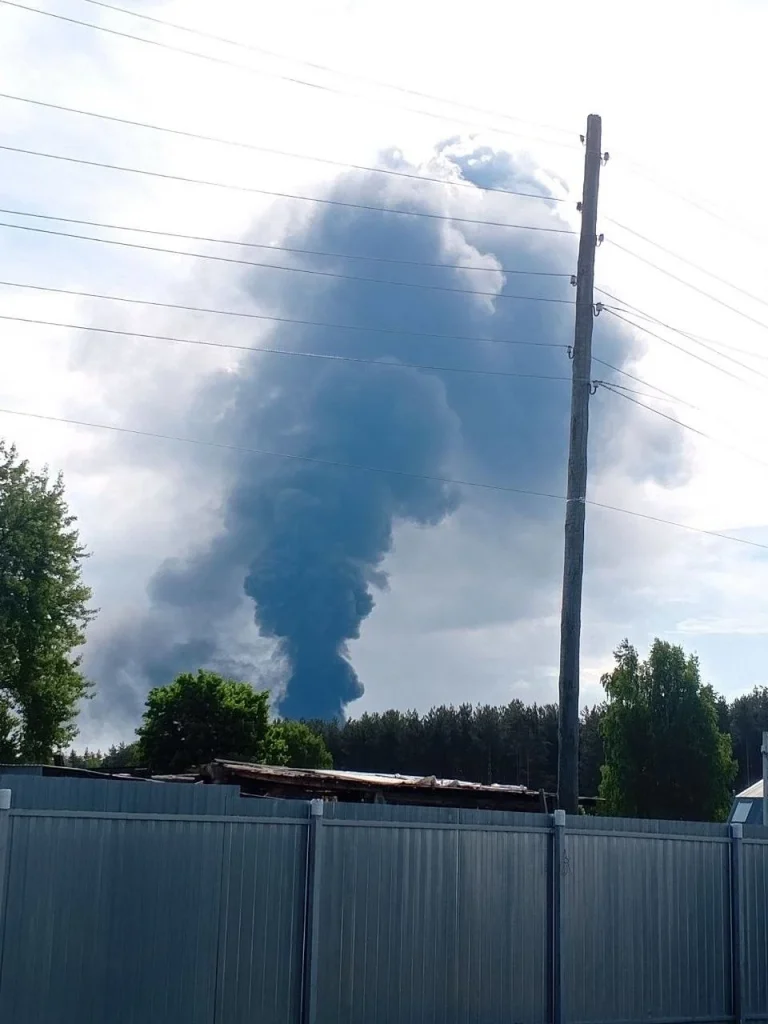
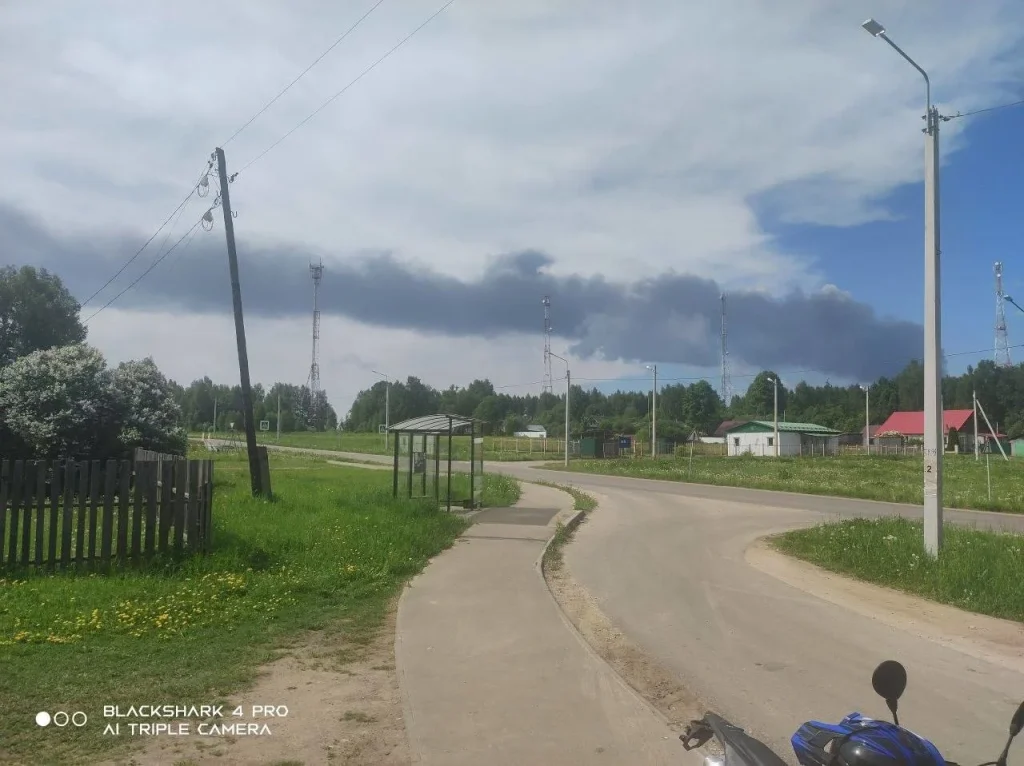
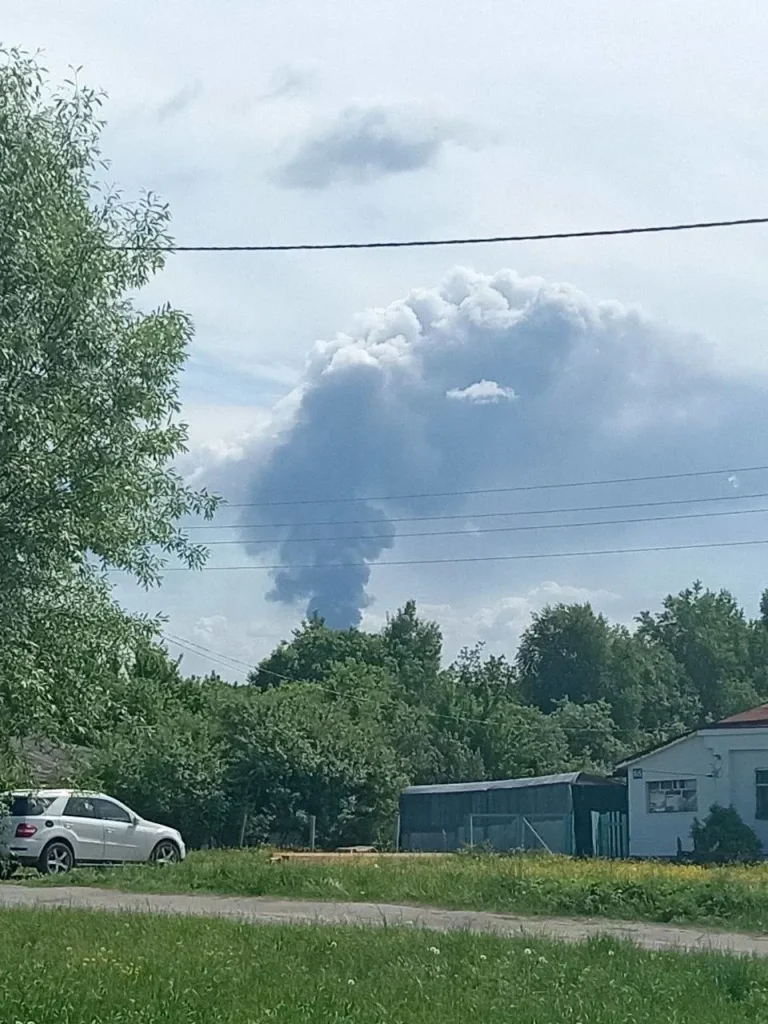
The Vtorovo facility is not an ordinary industrial site; it serves as the foundational hub for the Transneft corporation’s massive “Sever” (North) export pipeline project. This infrastructure corridor acts as the primary conduit transporting refined Russian diesel fuel from internal refineries directly to the maritime port of Primorsk on the Baltic Sea for international sale.
By successfully compromising this node, Ukrainian intelligence struck a direct blow against one of the Kremlin’s remaining stable flows of foreign currency.
Naval Losses: Deep Strikes in Novorossiysk
Simultaneously, Ukraine’s Special Operations Forces and drone components launched a coordinated raid on the naval infrastructure of Novorossiysk on the Black Sea coast. Lieutenant Colonel Robert Brovdi, commander of the specialized “Birds of Madyar” unit, published verified data confirming a series of successful strikes within the heavily guarded naval base.
The operation hit the frigate Admiral Essen and a Project 1239 dynamic-lift missile corvette, both of which represent major surface combatants utilized to police the Black Sea and launch Kalibr cruise missiles.
The raid also struck the adjacent Sheskharis oil terminal and the Gruchevaya Balka petroleum storage facility — the largest fuel depot in the Caucasian region, capable of holding 1.2 million tons of product. The disruption of these facilities directly hampers both the operational capacity of the Black Sea Fleet and the broader logistical supply lines feeding Russian forces on the southern frontlines.
Geopolitical Realignment and the US-Iran Maritime Negotiations
The structural realities of the war in Ukraine remain deeply intertwined with global energy markets and shifting diplomatic positions across the globe. This section analyzes the potential economic implications of ongoing maritime negotiations between the United States and Iran, alongside expanding espionage activities in the Caribbean and security developments within Washington.
The Hormuz Strait Factor and Oil Price Dynamics
According to reports published by the New York Times, the United States administration has made significant progress toward a diplomatic agreement with Iran intended to halt regional hostilities and completely reopen the strategically vital Strait of Hormuz. Under the proposed terms, Tehran would agree to surrender its accumulated stockpiles of highly enriched uranium, potentially transferring them to a third party or down-blending them to non-weapons-grade levels.
For the architecture of the Russo-Ukrainian war, this potential deal carries immense weight. The prolonged Iranian blockade of the Hormuz Strait had induced a global maritime recession and artificially bolstered oil prices.
The reopening of the strait, coupled with the potential lifting of energy sanctions on Iranian crude, threatens to flood the global market, driving oil prices down significantly. Given that the Russian federal budget is fundamentally dependent on inflated oil revenues, a sharp contraction in energy prices could mirror the economic conditions that precipitated the structural collapse of the Soviet Union.
Intelligence Escalation: Sino-Russian Expansion in Cuba
As Washington pursues stabilization in the Middle East, a counter-escalation is unfolding in the Western Hemisphere. Investigative reporting from the Wall Street Journal has revealed that both Moscow and Beijing have dramatically expanded their military intelligence operations on the island of Cuba.
Since 2023, the number of active electronic eavesdropping and signals intelligence (SIGINT) facilities on the island has grown significantly. Out of 18 documented intelligence outposts, China currently manages three, Russia oversees two, and several others are run jointly with Cuban intelligence.
These stations are positioned to intercept non-encrypted communications channels across the southeastern United States, focusing heavily on the US Central Command (CENTCOM) in Tampa and the US Southern Command (SOUTHCOM) in Miami, marking a clear geopolitical effort to pressure domestic US security structures.
Domestic Context: Security Incidents in Washington
The broader geopolitical tension forms the backdrop for erratic security incidents within the United States itself. Journalists at the White House were abruptly evacuated to press briefing rooms following a rapid exchange of gunfire near a main security checkpoint.
Secret Service agents neutralized an armed intruder, later identified as 21-year-old Nasir Best, an individual with a history of severe psychiatric illness who had previously attempted to breach the complex.
While independent analysts view the event as an isolated incident driven by mental instability rather than a coordinated state-sponsored operation, it highlights the domestic volatility and high-alert status characterizing the political environment of the American capital.
Frontline Realities and Cultural Disagreement
On the sovereign territory of Ukraine, the war continues as a grinding battle of attrition defined by structural geographic barriers. This section examines the tactical situation along the critical Liman frontline axis and details a rare instance of public, high-profile anti-war dissent from a prominent cultural figure within the Russian elite.
The Liman Axis and Battles Along the Siverskyi Donets
Tactical reviews of the eastern theater underscore the immense defensive value of the Siverskyi Donets River along the Liman operational direction. Throughout the fluid maneuvers of 2022, this natural water barrier formed the backbone of the Ukrainian defensive line, flanked by dense forest tracts that shield the major urban strongholds of Izium and Sloviansk.
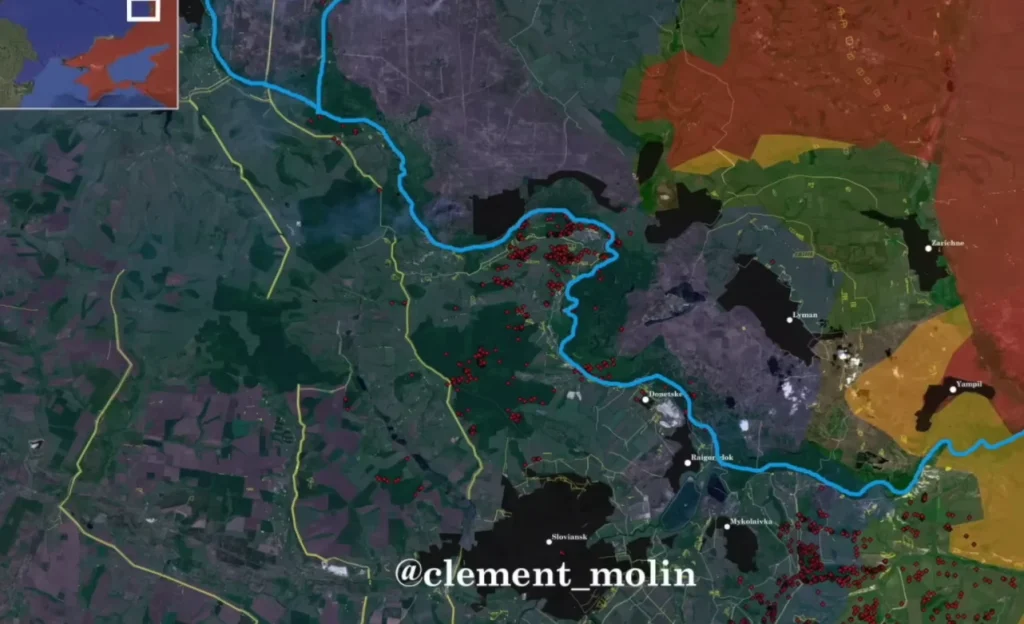
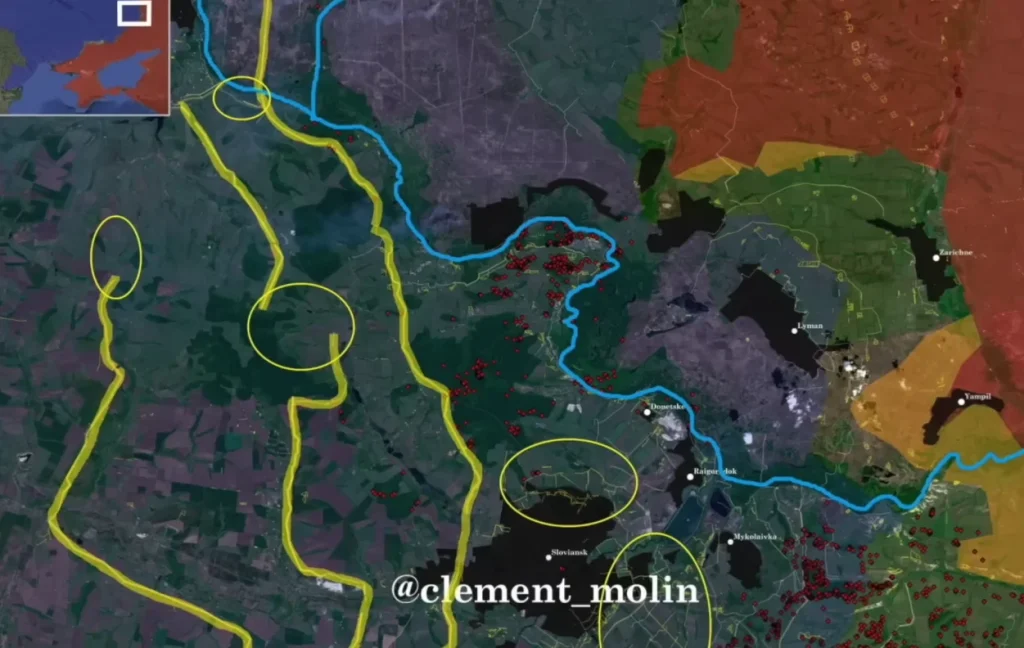
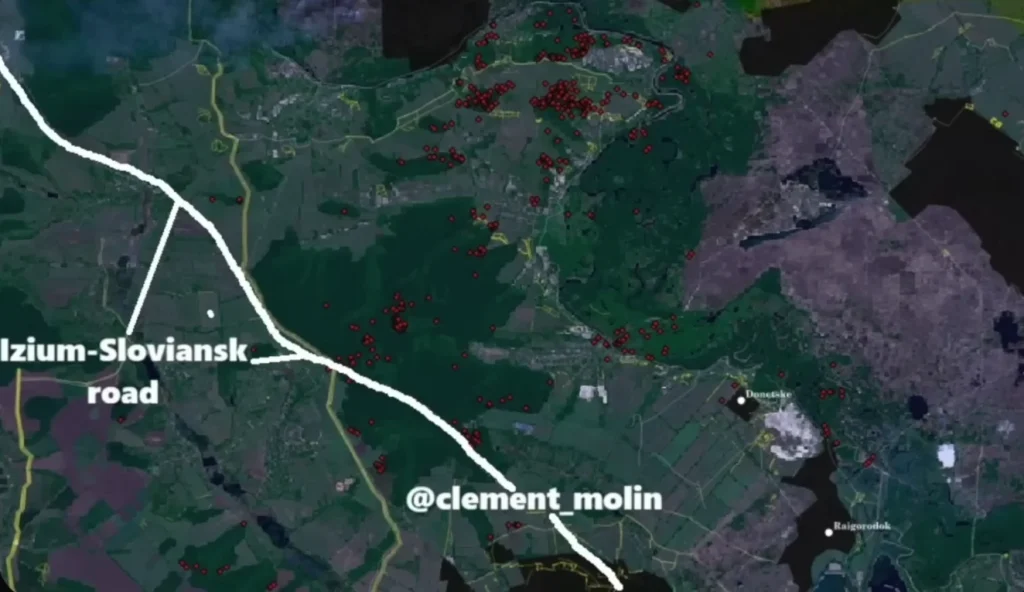
Over the past three years, Russian forces have sustained a slow, costly push toward Liman, attempting to sever the strategic Izium-Sloviansk highway while avoiding risky, direct urban combat inside Liman itself. To achieve this, the Russian military has focused heavily on areas north and east of the river.
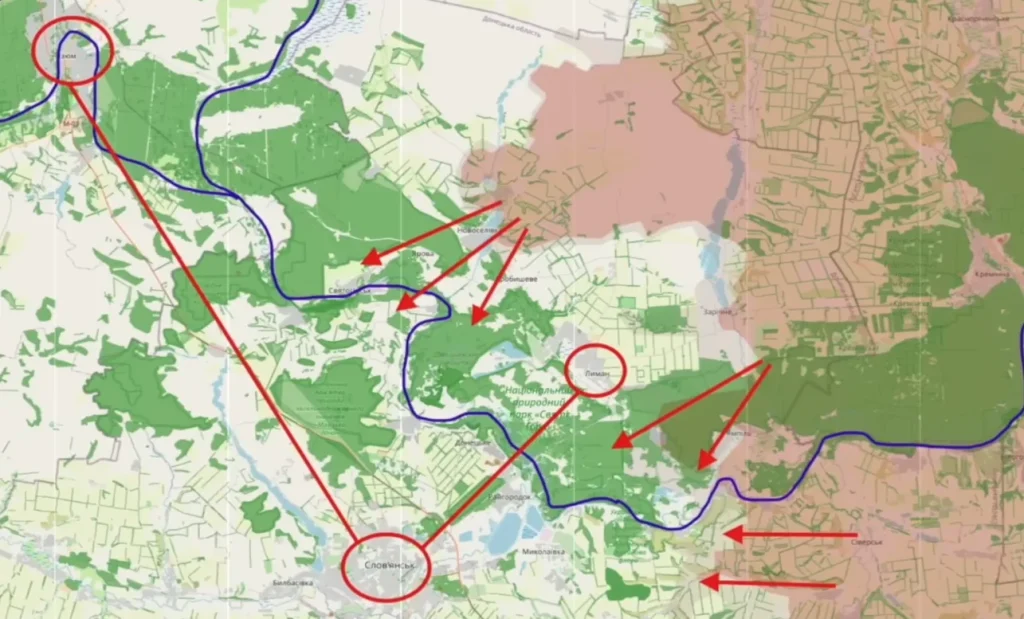
Geolocated data compiled by military analysts shows that Russian aviation dropped more than 500 guided aerial bombs across the forested high ground near Sviatohirsk throughout May, aiming to clear out Ukrainian artillery positions and drone teams. Concurrently, a fierce Russian push is underway near Rai-Oleksandrivka, east of Sloviansk, as part of a wider effort to bring Sloviansk and Kramatorsk within standard artillery range.
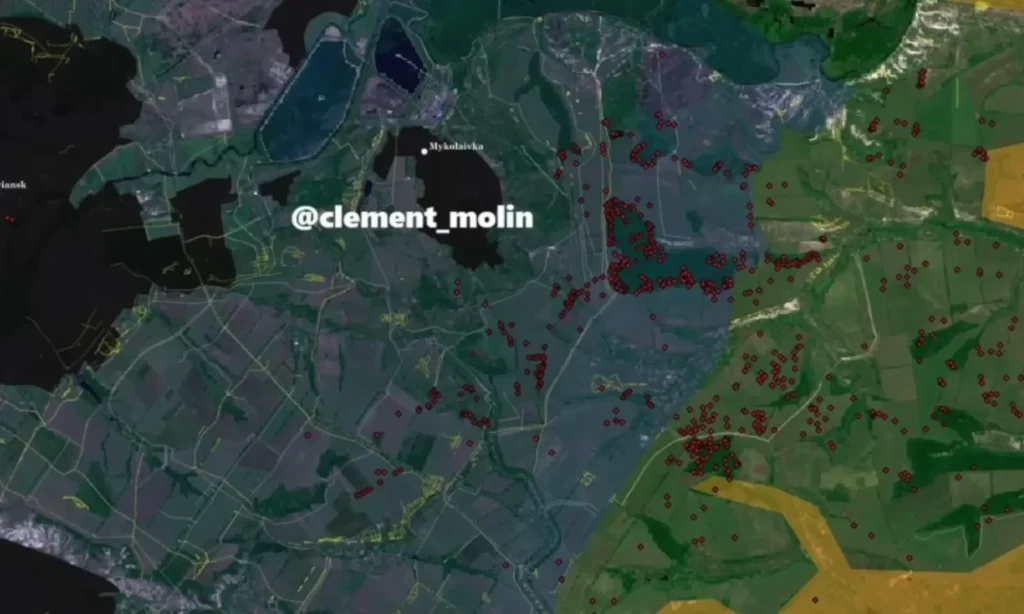
To counter this mounting pressure, Ukrainian forces have begun launching tactical counter-offensives, with elements of the 3rd Army Corps executing a localized flanking maneuver designed to pinch off the protruding Russian Liman salient.
Cultural Dissent: Zvyagintsev’s Call at Cannes
While the military conflict intensifies, a striking moment of political friction occurred within the Russian cultural sphere. At the Cannes Film Festival, acclaimed Russian director Andrey Zvyagintsev was awarded the Grand Prix for his new film, Minotaur.

Standing on the international stage, Zvyagintsev bypassed standard artistic pleasantries to deliver a direct, public appeal to Vladimir Putin, calling on him to immediately halt the war.
Zvyagintsev articulated a fundamental truth often obscured by state propaganda: millions of people on both sides of the front line share a singular desire for the killing to stop, and because the invasion is driven entirely by the personal decisions of the Russian president, he possesses the sole authority to end the slaughter with a single directive. The event highlighted the persistent, though heavily suppressed, anti-war sentiment among Russia’s preeminent intellectual elite.
Domestic Crises Inside the Russian Federation
The economic and logistical strains of sustaining a total war for over four years are increasingly manifesting as internal crises within Russia itself. This final section documents the expanding domestic anomalies within major Russian cities, the raw economic calculations driving citizens toward or away from the front lines, and the systemic fraud used by military authorities to press-gang conscripts into active combat.
The Saint Petersburg Communications Blackout
An unusual domestic anomaly has gripped Russia’s second-largest metropolis, Saint Petersburg. For several consecutive days, regional authorities enforced a total shutdown of mobile internet services across the entire metropolitan area.
While local officials offered no formal justification, the digital blackout was accompanied by abrupt security clampdowns. Law enforcement units and masked security personnel raided and forcibly closed the “Blue Nights” municipal food and beverage festival on its opening day, citing “circumstances beyond control.”
Independent commentators note that these extreme security measures, executed in a city far from the physical front lines, point to acute anxieties within internal security apparatuses regarding potential domestic unrest or undetected vulnerabilities.
Economic Realities: A Conscript’s Worth vs. Wartime Logistics
The state’s reliance on exorbitant financial incentives to sustain volunteer recruitment is facing a growing reality check among the working-class population. A resident of Yekaterinburg named Sergey published a widely circulated account detailing the realities of mobilization.
Sergey explained that despite the state offering sign-on bonuses of up to 3 million rubles, the funds fail to offset the near-certainty of death, noting that multiple close friends who signed contracts were returned in coffins within one to two months. He emphasized that skilled laborers can now earn comparable or superior wages working commercial shifts in the domestic extraction and manufacturing sectors without risking their lives.
Furthermore, he detailed severe logistical corruption, revealing that deployed soldiers must purchase their own body armor and medical supplies, and that the military routinely delivers incorrect or misidentified remains to grieving families in sealed zinc coffins to avoid bureaucratic scrutiny and processing delays.
Systematic Exploitation: Conscript Deception in Ussuriysk
The manpower deficit has driven the Russian military command to adopt predatory, fraudulent tactics to forcibly convert standard conscripts into contract soldiers for immediate deployment. A high-profile case emerged involving Artyom Korzinnikov (born 2004), a conscript from Yakutsk assigned to the 114th Motorized Rifle Regiment in Ussuriysk.
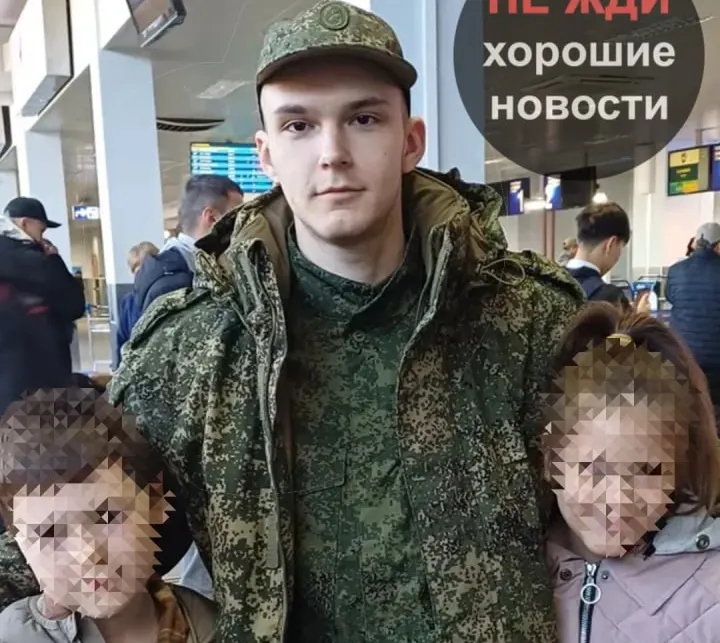
His mother, Oksana Korzinnikova, launched a public campaign revealing that military officers coerced her son into signing official documentation under the false pretense that he was merely completing routine paperwork to set up his military salary account. Officers explicitly assured the young conscript that his advanced computer literacy meant he would remain safely in the rear working as a logistical clerk.
In reality, Artyom was tricked into a binding, indefinite combat contract. When his mother traveled to Ussuriysk to confront the unit command, she was barred from the facility. Her subsequent formal complaints to the military procuracy reflect a widespread, systemic pattern of deception used to funnel untrained Russian youth into frontline combat zones.
This article is based on source material from Michael Nacke’s video covering day 1551 of the war →