
To provide an accurate picture of the current state of the war, we must look at the structural advantages and systemic failures on both sides. As of May 2026, the conflict has moved beyond a simple war of attrition into a phase where technological reform and economic stability are the true arbiters of the front line.
1. The Stagnation of the Russian Offensive
A year ago, Russian forces were advancing at what was described as a “snail’s pace.” Today, even that description is too generous. Military analysts now characterize the Russian position as one of total stagnation. The initiative, which Moscow managed to seize in late 2023 following the Ukrainian counter-offensive, is rapidly slipping away. In several key sectors, the Armed Forces of Ukraine (AFU) have transitioned from active defense back to offensive operations.
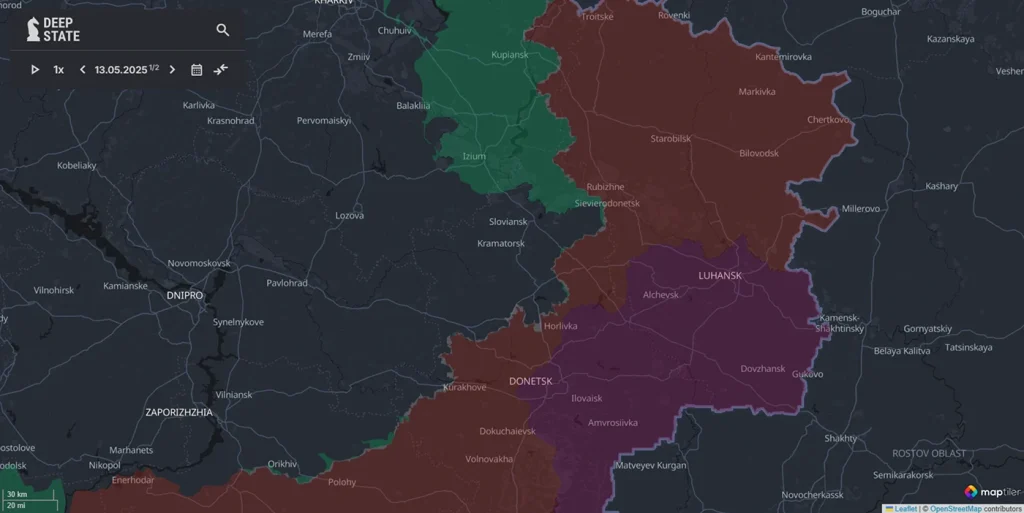
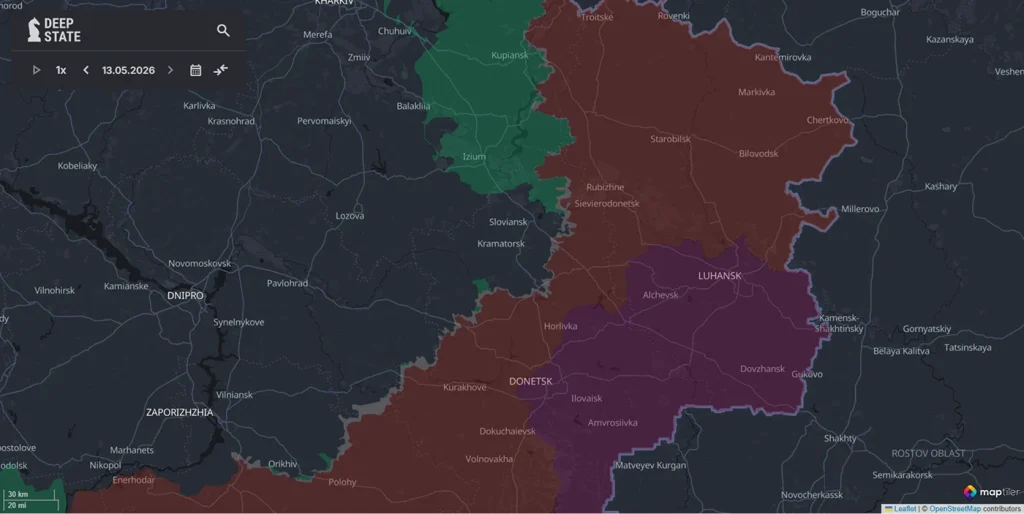
An inexperienced observer would struggle to distinguish between these two maps, despite the fact that a year has gone by.
2. The Attrition Gap: Recruitment vs. Reality
For the past six months, Russia has faced a critical tipping point: battlefield losses are now higher than the number of new contract recruits. Several factors have converged to create this crisis:
- The 50,000 Target: Ukraine’s Unmanned Systems Forces have set a strategic goal to inflict 50,000 Russian casualties per month, a target they are increasingly meeting.
- Failed Incentives: Traditional propaganda has lost its grip. The Kremlin is forced to constantly increase sign-on bonuses just to keep volunteers coming — essentially paying men to kill their neighbors. Furthermore, soldiers mobilized in 2022 are still not demobilized, leading to a widespread belief that a contract is a “one-way ticket.”
- Depleted Channels: The “easy” recruitment pools have dried up. The amnesties for prisoners, the targeting of the homeless and debtors, and the recruitment of individuals facing criminal charges are no longer yielding the necessary numbers.
- Forced Enrollment: Authorities are now resorting to deceiving or forcing conscripts into contracts and pressuring university administrations to act as military recruitment agents for students.
- Casualty Ratios: As the attacking force, Russia is suffering disproportionate losses. The killed-to-wounded ratio has reached critical levels, currently estimated at 2:1.
3. The “Drone Wall” and Technological Superiority
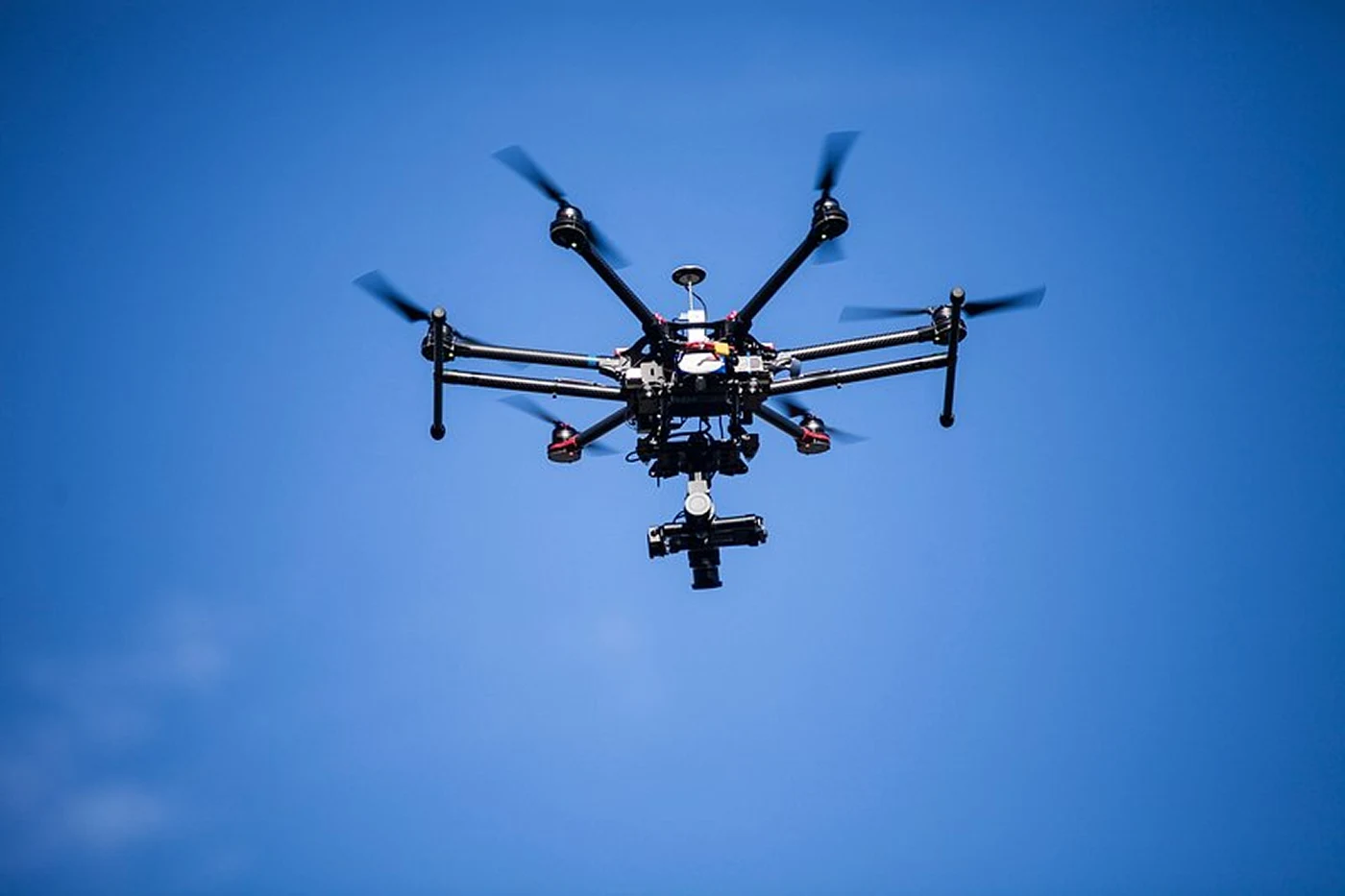
The AFU has undergone a radical transformation with the establishment of the Unmanned Systems Forces and the “Drone Wall” project. Drones now account for 60% to 90% of all battlefield damage.
Ukraine’s system is highly efficient due to a lack of state monopoly:
- Competitive Ecosystem: By allowing private developers to compete, the AFU receives a vast variety of tech — from FPV kamikazes to ground-based robotic evacuation units.
- Direct Feedback: Developers work in close contact with frontline units to modernize tech in real-time.
- Starlink Edge: Since Starlink access was successfully blocked for Russian forces, Ukraine’s digital coordination has become a decisive advantage.
In contrast, the Russian drone program is plagued by corruption and single-developer monopolies. Funding is frequently laundered, and soldiers are often forced to buy their own drones back from greedy commanders.
4. Deep Strikes: The War Moves to the Urals
The war is no longer confined to the borders. Ukrainian long-range drones are now a daily reality in the deep Russian rear, striking targets as far as the Ural Mountains — over 1,000 miles from Ukraine.
Primary targets include military and energy infrastructure. The recent strike on the Tuapse refinery was particularly devastating, resulting in an environmental disaster described as “oil rain,” with massive fuel contamination of the soil and sea. These strikes cripple both Russia’s domestic fuel supply and its export revenues.
5. Persistent Challenges Within the AFU
Ukraine is not without its own internal struggles. Personnel issues remain a significant concern:
- Training and Morale: Some brigades suffer from inadequate training and poor internal command climates, leading to instances of desertion or soldiers attempting to transfer to units with better conditions.
- TCC Reform: The conduct of Territorial Recruitment Centers (TCC) has caused friction with the public, though the government is currently pushing through a massive structural reform of the system.
- Corruption: High-level allegations continue to surface, such as the recent investigation into Zelensky’s ex-chief of staff Yermak and corruption within the energy sector. However, the survival of the NABU (National Anti-Corruption Bureau) — saved by civil society pressure last summer — ensures that these issues are brought to light.
6. Russia’s Domestic Point of No Return
Russia appears to have reached an economic and geopolitical breaking point:
- Fiscal Collapse: The budget deficit for the first four months of 2026 reached 6 trillion rubles (~$80 billion), or 2.5% of GDP. This has already surpassed the annual planned deficit of 3.8 trillion. For comparison, the entire 2025 deficit was 5.5 trillion.
- Failed Tax Hikes: Raising VAT to 20% backfired as businesses closed or moved into the “shadow economy.”
- Cultural Isolation: The government has moved to extreme bans, including periodic internet shutdowns and even a ban on the use of English words and letters in public spaces.
- Geopolitical Decline: Russia is losing its regional hegemony. Armenia has exited the CSTO, Azerbaijan is in conflict with Moscow over a downed civilian aircraft, Belarus (Lukashenko) is making quiet deals with the US, and Kazakhstan is distancing itself.
- The China-India Trap: Due to sanctions, Russia is caught in a “monopsony” where China and India are the only buyers, allowing them to drain Russian resources at heavily discounted prices.
Conclusion
Russia enters the mid-point of 2026 profoundly weakened. While it remains a dangerous military adversary, it is losing the initiative due to the AFU’s structural reforms and its own internal economic decay. Putin’s only potential “lifeline” is the high oil price caused by the Hormuz Strait blockage, which may yet save the Russian budget if the US-Iran conflict remains unresolved.For more on the daily frontline developments, visit The War Today. For deeper dives into Russian politics, see Beyond the Frontlines, and for the internal Russian perspective, explore The Z-Whining.