
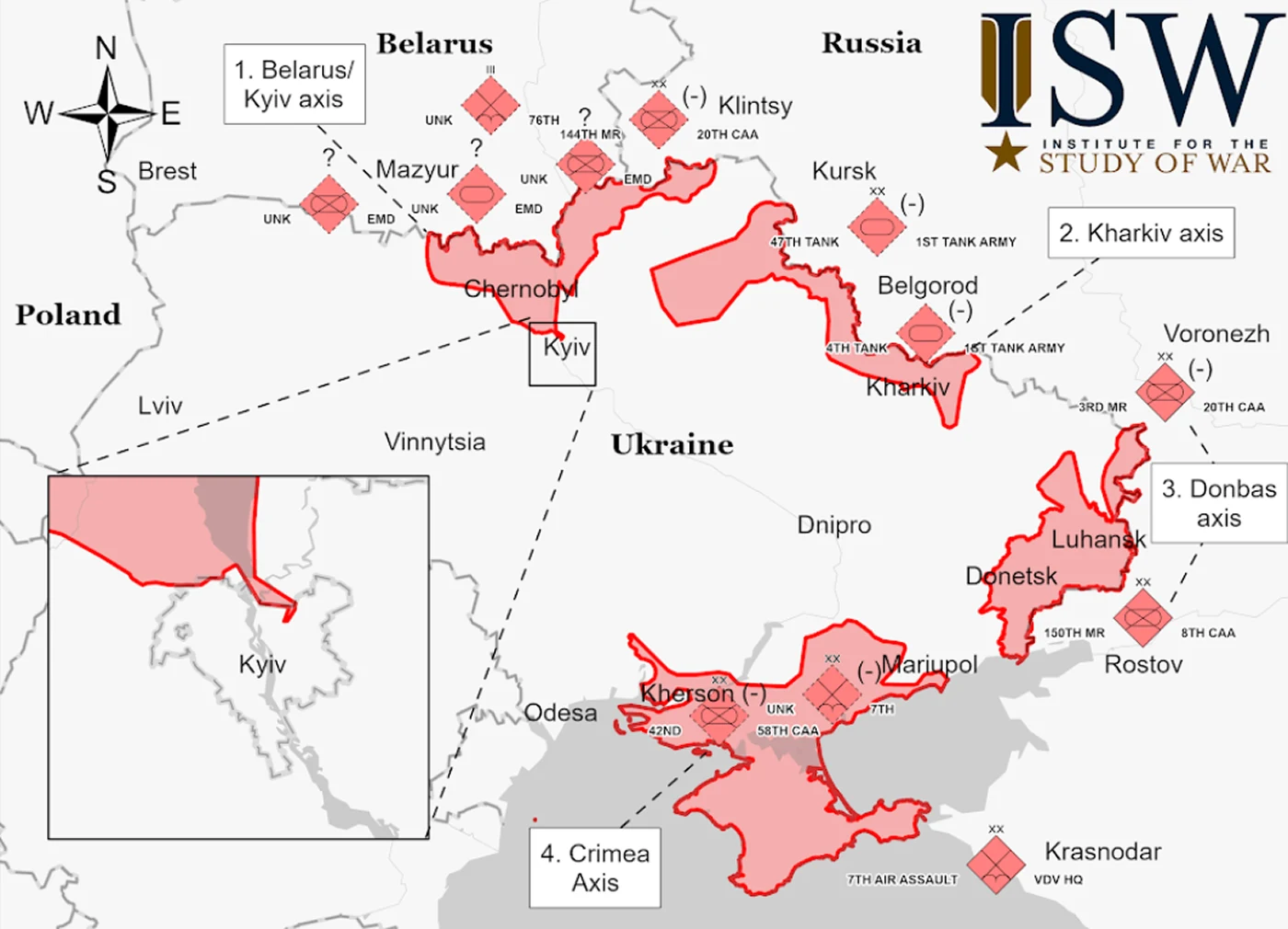
By the third day of the full-scale invasion, the Kremlin’s plan for a swift “blitzkrieg” began to crumble against the reality of Ukrainian resistance and Russia’s own systemic failures. While Russian officials ordered an offensive “from all directions,” the world witnessed a superpower’s army struggling with basic needs: fuel, food, and communication.
1. “I Need Ammunition, Not a Ride”
The most significant development of Day 3 was not military, but symbolic. As Russian sabotage groups infiltrated Kyiv, the United States government offered to evacuate President Volodymyr Zelenskyy. His defiant response — “The fight is here; I need ammunition, not a ride” — instantly became a global symbol of Ukrainian resolve.
This decision fundamentally broke the Russian psychological operation, which was predicated on the belief that the Ukrainian leadership would flee, leaving the country in a state of decapitated chaos. Instead, Zelenskyy’s presence in the capital provided a massive “moral boost” to both the regular army and the growing ranks of territorial defense volunteers.
2. The Logistical Collapse: “A Shameful Advance”
Field reports from the Conflict Intelligence Team (CIT) highlighted a staggering level of logistical incompetence within the Russian military.
Fuel and Food Crisis
By February 26, the highways leading to Kyiv and Kharkiv were littered with abandoned Russian BMPs and tanks that had simply run out of fuel. In the town of Melitopol and elsewhere, Russian soldiers were documented looting grocery stores, fleeing with bags of food — a clear sign that the invasion’s supply lines had failed.
The Stagnation of Resources
Analysts believe the Russian command miscalculated the window of opportunity. Having sat on the border for weeks as the invasion date was repeatedly pushed back, troops had consumed their rations and fuel reserves before the first shots were even fired.
Broken Equipment
Captured hardware revealed that much of the Russian equipment was in poor repair. Witnesses cited an incident where General Muradov reportedly berated a missile brigade because their technology was “worse than what was seen in the Syrian army.”
3. The Irpin Ambush: Sending Police to a War Zone
One of the most inexplicable tactical failures occurred near the Irpin bridge on the outskirts of Kyiv.
The Kemerovo OMON/SOBR Disaster
A column of Russian National Guard (Rosgvardia) units from Kemerovo, Siberia, was ambushed and destroyed. These are riot police — trained for domestic crowd control, not for storming a fortified million-person city.
Это пока что самая странная история о масштабной российско-украинской войне. Почитайте, как кемеровские омоновцы и собровцы ездили захватывать Киев (с предсказуемыми результатами) https://t.co/kBFfYxKr7G pic.twitter.com/CcziXZeoD3
— CIT (@CITeam_ru) February 26, 2022
“Passport Officers” on the Frontline
Among the prisoners taken near Kyiv was an inspector from a “documentation group” — essentially a clerk or passport officer. This indicated that the Russian military was “sweeping” its ranks, sending anyone in uniform into the meat grinder regardless of their combat training.
4. Psychological Warfare: The “Kadyrovite” Factor
To instill fear, the Kremlin activated Chechen units under Ramzan Kadyrov.
The Empty Base “Capture”
A viral video showed Chechen troops hoisting a flag over a National Guard base outside Kyiv. However, it was later confirmed that the base was empty and had been abandoned by Ukrainian forces before the Chechens arrived.
Analysis
While highly motivated, the “Kadyrovites” were primarily used for psychological intimidation and “clean-up” operations rather than direct engagement with the Ukrainian regular army, which remains far superior in tactical planning.
5. Military Status: The “Pincers” and Air Resilience
By the evening of February 26, the Russian Ministry of Defense issued a formal command to resume the offensive “along all axes,” claiming that a temporary halt for potential negotiations had been exhausted. However, military reality on the ground was starkly different from Moscow’s official reports.
Despite three days of bombardment, the Kremlin had failed to achieve total air superiority or a decisive breakthrough. Instead, the Russian command began shifting its focus toward broader encirclement tactics, as the initial “decapitation strike” on Kyiv remained stalled. This phase of the conflict was defined by a desperate search for strategic openings and the continued, surprising resilience of the Ukrainian defenders.
The Encirclement Strategy
Russia attempted a “pincer” maneuver, trying to bypass the defiant city of Kharkiv to strike the Joint Forces Operation (JFO) in the Donbas from the rear.
Resilient Airspace
Despite claims of Russian air superiority, the Ukrainian Air Force and air defenses remained active. Aerial dogfights were reported over Kyiv, and Ukrainian jets and drones continued to strike Russian columns, further exacerbating their logistical woes.
Civilian Toll
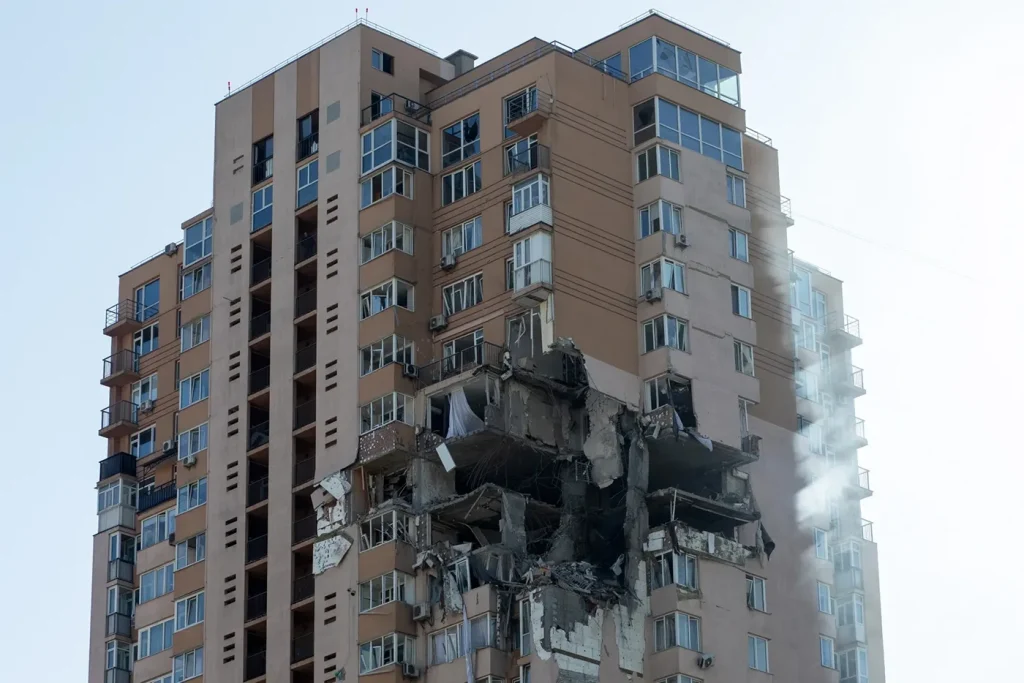
A high-rise apartment building on Lobachevsky Avenue in Kyiv was struck by a missile. While Russia claimed it was a malfunctioning Ukrainian air defense missile, the incident added to the growing list of civilian tragedies as people were forced to spend their third consecutive night in metro stations and bunkers.
6. The Human Cost
As of the end of Day 3, conservative estimates from CIT placed Russian fatalities at a minimum of 500 soldiers, though Ukrainian military sources cited figures as high as 3,000. For the Russian people, the silence from their Ministry of Defense began to mask a growing number of empty barracks and unanswered calls from worried families.
This article is based on source material from Michael Nacke’s video covering Day 3 of the war →